Recent Posts

A Womb, a Crib and the Dead Sea (4)

(“Back to Beit Lehem”    |    The Jordan Journey, part 4    |    May 17, 2018)

Zigzagging – this is what we did on our first day on the road. “Hebrewism” – as I started calling it, trying to start feeling comfortable with this word in my mouth. Crossing over the wounded rift again and again. South to north on the Israeli side, than north to south on the Jordanian side, all the way to our first stop at the dead sea.

May 17th turned out to be one of the hottest days I have experienced in our area! When we exited the van at our first overnight location, it felt like somebody had left an oven door open. A scorching desert wind was burning our eyes as we hurried into the hotel in the territory of ancient Moab.

A leaking refrigerator in one of our rooms required us to call maintenance. After a few strangely futile attempts to fix the simple problem, we gave up and went out for dinner. Later we found out that maintenance did show up, but not in order to fix the leak. The man left us a surprise in the room.

IMG-20180525-WA0023

Yes, a baby crib! 

He probably had the wrong room number, and most likely left another guest with an unnecessary fixed refrigerator and a much needed crib. But the crib confirmed what God has been already forming in our spirits: that He is about to birth something in or through us, and that He is preparing the necessary space for us to nurse and nurture it.

The next morning we escaped the heat by hiding in the hotel room, planning, praying, gleaning precious truths from the Word, still figuring out the details of our mission. And weeping…

Many of our prayers and conversations were recorded. Some of them are so profound and multi-layered. I can sum it up for you in a paragraph, but than it will not carry the same weight. This journey was not about bottom lines, but about a process. And the process is what I would like to take you through, especially if you have Israel and this region on your heart. Understanding what happened to us during that short week should impact your prayers on our behalf and your stand in the gap.

Excerpts From These Recording

Rania gently asked if Naomi (meaning Israel) fears approaching God directly, if she really still needs a Ruth to do that. If there is fear and lack of trust in our national being. After all, according to Naomi’s perception, God is the one who made her life bitter (Ruth 1:13, 20). All throughout the book of Ruth there is no direct communication between her and Boaz. It is always done through Ruth. Why? What was there in Naomi’s soul concerning God? Rania also asked how do I think our relationship with God (as a nation) can be restored.

I believe that such restoration can take place only with the assistance of all kinds of Ruths, who see us through the process. Israeli Jews are so used to one of two common dynamics with Gentile believers. They either love and pamper us because of our horrific history, even to the point of worshiping us for our glorious destiny; Or they compare our wounds to those we inflict on others (especially on the Palestinians), and expect us to take the lower path and constantly repent. Both dynamics are not serving God’s purpose. They only deepen the wounded rift and make it bleed even harder.

That morning, in the hotel room, I could see a third option for the first time. In the Biblical story, Ruth is accompanying Naomi through her progressive transformation. Her identity changes from a bereaved and bitter widow to a restored woman, who can nurse and nurture the next generation (Ruth 4:16). Ruth also shows her that men can be trusted, especially men in authority.

Priscilla then asked me to connect with my own journey (remember, this trip to Jordan was not just prophetic. It was also a peak of my own healing process [see I Will Tabernacle Inside You]. I paused to look inside my heart: how do I feel about crossing over into the unknown?

I found loneliness there, a familiar yet unpleasant feeling, that has been accompanying me for many years. It has already been touched by God in many ways, and through the years lost its sharp sting, but it was still there, especially in face of the unfamiliar. I wondered if Naomi also felt lonely on her way back from Moab. Yes, she had her companion, but in her brokenness, was she waiting for Ruth to also turn her back on her? She was used to it. They all left her one way or another, right? Yes, Ruth made a fabulous declaration of faithfulness, but Naomi was still testing her. Ruth is the one who promised to cleave to Naomi. Naomi, on the other hand, made no promises.

I was crossing over back and forth, north to south and south to north inside my soul, looking for cross points where my heart echoes with the heart of my widowed nation. The team listened, enabling me to reach deep, into places I could not see and touch without trustworthy listeners around me. There were moments I knew I was talking only about myself, but there were moments when my identification with Israel was so deep, that I could feel its heart beat. The girls asked for the details of the wound, in order to understand it better and take it to the next level.

What Do You Need From Us?

“What do you need from us in order to go deeper?” Priscilla asked.

“I need to know that my companions will be there even when the wound is in the open”, I shared what was in my heart. Even though our relationship as a team only started, I had a lot of trust in all four of these Ruths. I had no idea what I will find deep inside once we go back into prayer, but I wanted to touch that “something”.

Tian Jie was weeping quietly, at first. Then it turned into a bitter, deep, painful travail. I tried to connect in my spirit, but felt so dry. As a nation, I thought, our tears of true repentance have dried up. Hermana reminded Jeremiah’s cry about the absence of Balm in Gilead – the absence of the Tears, Flesh and Blood the Messiah offered us for healing (Jer. 8:22). The prophet does this just before he summons women to wail skillfully over Zion, in order to help her start reproducing tears again. Apparently, this was necessary since the Nation’s source had dried up  (9:17-18).

I listened to Tian Jie’s travail, allowing the Spirit to move. Only as I write it I realize she was doing exactly that: wailing skillfully to arouse something dry within me. She was doing what I saw before the journey started – the wounded rift will be watered by tears coming from the north. O, dear China, you have a bounty of them.

asdf

Israel cries, and a lot. Hard and loud at times, but this is not yet the bitter grief described by Zechariah – a cry birthed by a spirit of grace and supplication (Zec. 12:10). Once we will be able to weep that way, our mourning will be over.

I wondered why is it that I myself cannot cry a bitter cry. “Because it is too intimate”, I realized. It involves opening our deepest wound, being extremely vulnerable, and we / I don’t trust Him enough to do that. What if He will use it to break our heart again?

That is why we need the nations, including the Arab Ruths. We need them to push through for us. To show us that one can cry bitterly before Him and come out alive, restored, healthier.

Our national attitude towards grief is typical to the one of a bereaved woman, not the one of a Bride who can lean on her Beloved’s chest and draw from His bank of strength. We are not sure if He will be there to dry our tears and ease our pain. We have not seen His compassionate Face for so long, so we no longer approach Him as a Husband or as the Lover of our soul. That part of Him needs to be re-birthed in us.

Rania then mentioned that Israel is the one who divorced herself from God when she married the Baal. But God is still working towards the restoration of that marriage, until His Faces can shine again over the nation.

Hitting The Road Again

Late in the afternoon we finally left the hotel and drove to Mount Nebo. Summing up the riches and depths God had taken us into that morning, there were four major points we felt led to address on the mountain:

1. We wanted to see the Promised Land from its peak, just like Moses did. We wanted to have his eyes, as he says his final words to the nation.

2. This is where Moses warned the nation from the severe punishment of Hidden Faces (Deut. 31:16-18). We wanted to pray into it and make some declarations.

3. After Balaam’s failed attempt to curse Israel, he introduced them to the Baal worship. This happens immediately after God’s clear warning mentioned above. The proclaimed punishment was getting into motion as the true identity of the Angel of God was about to be hidden from our nation for centuries.

4. Moab was cursed there for not welcoming the children of Israel (Deut. 23:4). Ruth, as a Moabite, broke into that curse when she chose to embrace the God, the people and the destiny of Israel. We knew there must be a way out, a path of redemption, for all Moabites who would make the same choice.

IMG-20180525-WA0021

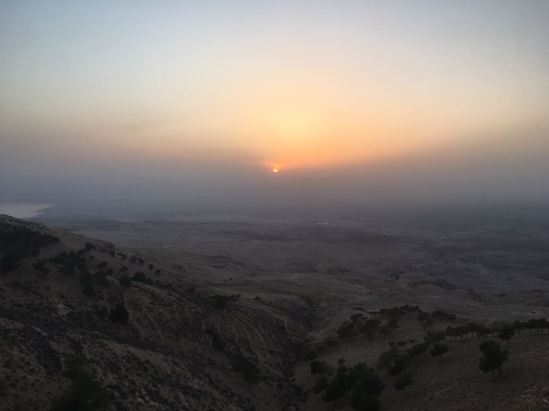
The sight from Nebo is breathtaking. Standing on its peak you
can see many parts of Israel, even when visibility is not that good

We found a spot away from tourists, that overlooks the rift, and allowed the soil, the view, the history it carries, to sink into our souls and spirits and connect with what God wanted us to carry there.

asdfasf


Other Than That…

The youth activity of “Streams in the Desert”, which I shared about [see You Look Like a Ruth] was an intense and touching experience.

sdfgsdsdf

Before the camp even started, God kept speaking about entering the Land and eating its fruit. Only after it started, did it occur to us that for the first time, many of the leaders grew up in this ministry. And now they are coaching others, showing them how their own brokenness had turned into a beautiful service. We were all so pleased.

IMG-20180802-WA0012

Sudanese refugees with one of their leaders

These Sudanese refugees did not allow us to touch them last year, or separate them one from another. Life as refugees taught them they must watch each other’s back at all times, especially at night. This year they came trusting, able to enjoy, mingle with others and receive.

They approached me after I taught forgiveness, and were so thankful. I could tell that at least some of them embraced the message and started using this weapon.

sdfgsd

“Young Life” assists “Streams in the Desert” with fun and sports activities.
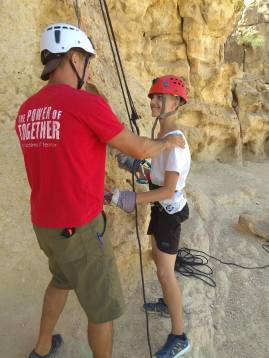
This year they brought rappelling equipment,
which encouraged many of these precious kids to face some of their fears and insecurities and leave with a sense of achievement

Hearts were softened, kids surrendered to God, the Holy Spirit was welcomed and worked gently and powerfully in many hearts. We were saturated and deeply satisfied.

It Is Being Produced Again (3)

(“Back to Beit Lehem”    |    The Jordan Journey, part 3    |    May 15-16, 2018)

Priscilla and Tian Jie arrived on the morning of May 15. The season of wheat harvest was at its peak, the sheaves ready to be harvested. Hermana picked them up from the airport and escorted them to one of the nearest fields. They could not resist it. As tired as they were, they had to stop and glean.

sheaf-2.jpg

The other team members joined us and we started praying. Five of us were going to cross into Jordan, each one with her own ideas and agenda. But what was God’s mind? Well, we had to learn to listen together, if we wanted to figure it out.

This was my first prophetic trip ever. I had no idea that every word spoken, every stressful moment, any misunderstanding – are all symbolic; that all sow their part to the advancement of the plot.

Finally, after two days of talking our heads off, praying, sharing back and forth, eating – of course – and learning to appreciate each other, we felt like we have a common rhythm, a shared heartbeat. That we are ready to hit the road.

Before leaving home we collected 12 stones, just in case we’ll find a resting place for them somewhere in Jordan. And there was one more thing we wanted to put our hands on as we step into the wound…

The Balm of Gilead

Several years ago, at the northern part of the Dead Sea, production of the Biblical Perssimon tree, known as Balsemon, from which the Balm of Gilead is produced, has begun. The Balm of Gilead is an expensive perfume that was produced in the Mountains of Gilead (modern day Northern Jordan).

IMG-20180712-WA0015

From Left: Priscilla, myself, Tian Jie and Hermana.
In the background: Balsemon bushes from which the Balm of Gilead is produced

We met with the guy who produces it, and heard a fascinating lecture about the process. The tree when scratched, produces tears of resin. And that weeping of the plant is not in vain – it produces oil that in Biblical days was used as a healing balm (see Jer. 46:11; 8:22). Apparently it takes more than 100 kgs of flowers, leaves or bark to produce just one cup of Balm. Crazily expensive!

We bought a few small bottles and headed north, to the crossing point. As we did that, we realized we are already driving in the wound, in the rift, starting at the southern point that I saw in the picture [see Crossing Over – A Hebrew], which is also the lowest point on planet earth. This was one more reminder that deep healing always starts with true humility of spirit. Anyway, this time we had some healing in our “wings” and a little better understanding of our mission.

Or at least that was what we thought…

You Look Like a Ruth (2)

(“Back to Beit Lehem”    |    The Jordan Journey, part 2    |    March 2018)

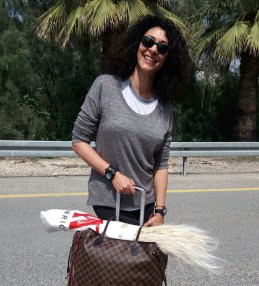
“You look like a Ruth!” Hermana shouted through her car’s open window to her Jordanian friend, who stood at the King Hussein crossing point with a sheaf of white wheat.

img-20180713-wa0009-1.jpg

Priscilla threw her gorgeous black curls back and laughed heartily, stating, “Your discernment is accurate. If only you knew why I was here.” Hermana’s comment had struck a chord, as Priscilla has been spending hours in the story of Ruth and Naomi, yearning to see a modern version of this co-operation.

She was born in Jordan and was taught by her father from a young age to pray for the peace of Jerusalem and bless the family of Abraham. Her heart was always full with love for the Hebrew nation, so she wanted the nations to realize that the Hebrew family is a part of theirs. Priscilla believes that Israel needs to see Jordan and the Arab peoples as family, and that we cannot be restored without each other’s help. But for now, she crossed the Rift in prayer for her people’s part.

Unknown to us at that point, the crossing over, the Hebrewism which I spoke of in my previous post, started that day, when Hermana picked her up.

sheaf.jpg

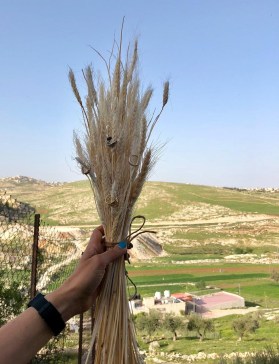
That visit to Israel (on March) was brief. Her goal: to wave sheaves of wheat over the fields of  Beit Lehem and pray for the old bread to be replaced with a fresh one

Hermana gave her a copy of my book – “His Faces” [see “His Faces” ]. I wrote it to recruit gentiles to their position as a modern Ruth on behalf of the modern Naomi, as she is making her way back to the House of Bread and to a renewed relationship with her Redeemer.

hermana

Hermana with her constant big smile

Priscilla read a portion of the book, and knew we must meet before she leaves. A couple of days later we met. Sitting across the table from her felt like talking to my spiritual mirror. This was my first impression after spending a long morning with her. Some of the vocabulary and imagery she uses when speaking about God’s Kingdom is pretty similar to the one He uses with me – the Tabernacle, Ruth, Naomi, Altar, Table of Shewbread…

I was surprised and humbled when I heard some of the insights she gleaned from the book of Ruth. I thought I knew it so well, but listening to her made me realize I only understood Naomi’s side of the story. My Zionist bones are so full of sympathy towards Naomi’s exile and I have gained much understanding of her sorrow, estrangement from God, her bitterness and widowhood. However Priscilla brought a new angle to the table. She explained Ruth’s heart, the heart of a “foreign” daughter who is eager to serve her Israelite mother-in-law (even to the point of allowing her to “use” her womb) and feel welcomed in the House of Bread.

It only then occurred to me that had Ruth lived today, she would be a Jordanian. She would even look like Priscilla. Writing it now embarrasses me a bit, but up to that morning in the restaurant I never thought of the Arab Ruths. Whenever I talked or shared about her, she was always a Westerner.

Back to Our First Meeting in the Restaurant

When we started speaking about travelling to Jordan together, Priscilla could already envision how that could create a platform for healing – not only at a personal level but also between the two people groups. But I was still in the “Marah” mode, focusing on the symbolic healing I wanted to carry on behalf of my wounded nation, by going into “exile” and journeying back. I could not even see how Jordan would benefit from that.

Priscilla wanted a few more prophetic sisters to join us. I didn’t care how many Ruths will be there to hold my hand or pray with me, as long as this journey would be launched. So this is how Rania (from Nazareth), Jesura (Jerusalem), Tian Jie (China) and Hermana (Migdal) joined and formed the team.

We started working on the details. We knew there aren’t any specific locations mentioned in the book of Ruth, besides the fields of Moab and the final destination – Beit Lehem. Checking what the Bible teaches about the region, it became clear that we have to include Jacob’s journey to Canaan on his way back from Laban. Thus we added Gilead, the passage of Jabok and Peniel to our list.

Mount Nebo, Aman, Medaba, Tishbi – these too were must see locations. Petra? Na, not on this trip, we decided.

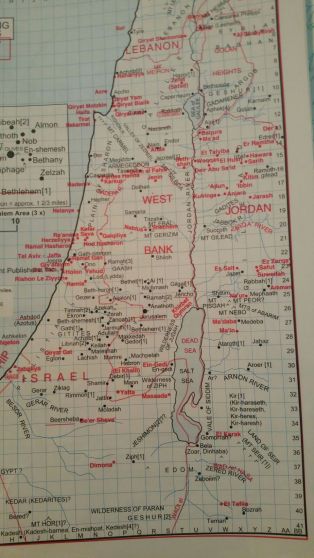
map

A map of Israel and Jordan with which we made our plans.

In black are the Biblical names of the sites; red is the modern ones.

It took a few weeks to figure out the dates. Priscilla was to fly in from TX, Tian Jie from China. Finally the trip was settled for May 15-22.

“We are in a God moment”, said Priscilla, and everyone involved understood this.


Other Than That…

This journey was so deep and multi layered, that it will take a few posts to cover. I don’t really think I can cover it all, but I will certainly try to share with you some of the depth of this experience, and the meaningful change it brings into my life.

In the meantime, I continue with the usual ministry: teaching, ministering in small groups, planning another Tabernacle Seminar to English speaking tourists, working with holocaust survivors, etc.

This Monday I will join the youth ministry of Streams in the Desert, who work among broken families in the southern region of Israel. About 50 teenagers (most of them from Messianic homes, although not all are born again. Majority come from broken homes) will attend a 4 days’ camp, where I will be teaching the team and kids to forgive.

The title this year is “Secret Weapon”. The program includes a lot of fun, but also two short slots for teaching each day. I am not just going to teach it, but hopefully equip them with this Secret Weapon. We want them to see how God uses suffering to mold us, and that their battles are a language that carries a spiritual message from the Throne Room. We pray that they will be doers, not just hearers. That they will choose to repent and forgive, versus remain victims of someone else’s choices.

Before the kids arrive on Wednesday I will have two days with the team, and in between all the many preparations each one of them has to do, I will train the (almost 40!!!) team members to use this great weapon, so they can testify later to the kids about the breakthroughs they saw once they chose to forgive.

We have a great prayer support throughout this program. There will be at least 10 intercessors with us, praying over every child and team member, every detail and need. This is my 3rd year with this youth camp, and I have seen the clear difference the prayer team creates. I am excited to see God’s hand again moving before our own eyes.

More about their ministry and the coming camp:

 https://www.facebook.com/pg/afikimbanegev/photos/?ref=page_internal

Crossing Over – A Hebrewism (1)

(“Back to Beit Lehem”    |    The Jordan Journey, part 1    |    May 10, 2018)

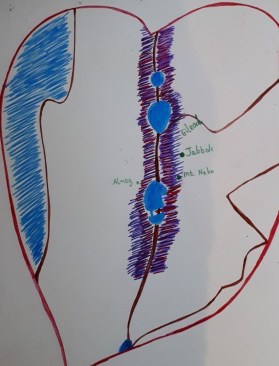
We were about to break bread together, when God impressed me with this picture, that shows a piece of His heart.

IMG-20180706-WA0022

“A wound inside His heart?” I wondered. Yes, apparently. Inside His heart I saw the map of Israel and Jordan, with a deep wound in the middle. The Jordan valley, the Rift.

This happened at the end of a Jewish-Arab conference I attended. After listening to stories and testimonies for two full days, I realized how most of us deepen the wound. Not because we fight with one another. The conference was full of mutual respect and sincerity. But many times we think we sow healing, while in reality we scratch the wound, tearing more layers apart.

And it is not only Arabs and Jews who cause it. Most Christians who are involved with this region or live in Israel tend to take sides, thus making the wound bleed even more, not realizing this Rift is right in the heart of God.

I also saw that the wound will be healed with tears shed from the north, filling the water reservoirs along the rift, and eventually turning the Sea of Salt into a sweet resource.

Ruth and Naomi Journey Together

When I saw that picture, I was already planning to travel along this wounded rift a few days later. The idea to take that journey was birthed in a surprising encounter with a Jordanian “Ruth”, who popped into my life as if straight out of my book’s pages (see “His Faces” – new book now available), or rather, out of the Bible.

My plan was to cross the border with her into Jordan. I wanted to symbolically go into “exile” as a Naomi, in order to “collect” myself, my people, and cross back into Beth Lehem – into the house of bread.

IMG-20180706-WA0021

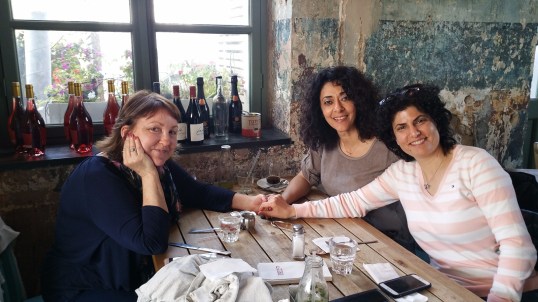
My first meeting with my two Arab Ruths – Priscilla and Rania, in Jerusalem 

We first met a few weeks earlier, at the beginning season of the harvest of barley, right before Passover. So Pentecost sounded like the best timing for our journey. After all, the book of Ruth takes place between these two season (see Ruth 1: 22), so delighted about the perfect timing, we decided to relive the story of Ruth and Naomi.

I also had a personal agenda. I connected this journey to my personal healing process in the Tabernacle [see I Will Tabernacle Inside You], and was looking forward to touch my alienation from myself from a fresh angle. I figured that this journey is not only prophetic, but also a personal return from my emotional exile. No more standing on Mt. Nebo, looking at what is happening as if it takes place outside myself, and sharing it only after I process it.

I had no idea I was going to leave a part of my heart there and return home with deep insights concerning the wound, or that I will be carrying it inside my heart. I did not know it was going to affect my routine, my understanding, my passions. To the point I could not even write much about it until now. I couldn’t find the right words to describe this precious experience. No, this was not an experience; It was a journey, a passing over the wound back and forth.

A Hebrew 

In Hebrew, “crossing over” means exactly that – to be a Hebrew.  The words cross, pass and a true Hebrew are derived from the same root: ABR.

Abraham was a Hebrew because he crossed over from a culture of idol worshipers into monotheism, from Ur of the Chaldeans into a promised land. The children of Israel are called Hebrews (see for example Gen 43:32; Ex. 2:6, 13; and others). Back than we were not Jews yet. Jews are the descendants of the kingdom of Judah, and that comes into the picture much later. The first time an actual reference is made to the Hebrews as Jews (YEHUDIM) is in 2 Kings.

So I was ready to practice my Hebrewism, to cross over the rift, the wound, and see how God will lead us and use us.

IMG-20180706-WA0023

Ruth and Naomi – Priscilla and myself in a wheat field in Jordan

Be on the lookout for my next post, in which I will start sharing about the richness of that journey.

Ears, Eyes, Heart

“It is time, Lord”, I declared this morning, as I meditated on Isaiah’s cry: “How long, Lord? Until when?”

Isaiah just wanted to tell everyone of the Glory he had witnessed, but instead was commanded to proclaim a severe punishment upon our nation, the punishment called “Hidden Faces” (Isa. 6:9-10).

How can one ignore an ultimate Truth when it is right in front of their eyes? How can we not hear and see the real thing, even when miracles are happening? I tended to think it is impossible – to be that deaf and blind… until I checked my own heart and realized how common this phenomenon is.

I have been battling an ear infection this past week. The pain started going up towards my right eye and down towards my jaw. Since I was preparing for an adventurous journey to Jordan that starts today (will share more with you when I come back next week), I wanted to get my health restored quickly. So I begged the doctor to prescribe some antibiotics. But he would not agree. “I can’t find anything wrong. Both your ears and throat are clear, so I cannot prescribe anything!” Ouch!

This morning I finally got the point. It’s my spiritual ear that is battling with infection, not the physical one. No wonder the doctor could not find anything.

I realized that God was pointing towards my own spiritual deafness, and also using the pain to recruit me to pray for the eyes and ears and heart of my nation. This week is a powerful and exciting one for Israel. We are 70 years old (plus a few thousands), we dealt so professionally with an Iranian threat from Syria, America just moved its embassy to Jerusalem, and we even won the Eurovision contest.

The line seems to tend in our favor in many other fronts, but does it transform our hearts? Does it put an end to our dulled ears and closed eyes? I would love to believe it does, but I think I should better recruit your prayers specifically for that.

Enzo Montano: I manichini di Monaco – Sylvia Plath

In face of everything that is happening now, it is time, I believe, for the heart and eyes and ears of the Jewish nation to soften, to look at the real reality, to see His mighty hand pulling the strings and to listen to His heartbeat.

Answering Isaiah’s painful cry, God gave him a historic time line, that explains when we will see and hear and understand:

“Until the cities lie ruined and without inhabitant, until the houses are left deserted and the fields ruined and ravaged, until the Lord has sent everyone far away and the land is utterly forsaken. And though a tenth remains in the land, it will again be laid waste. But as the terebinth and oak leave stumps when they are cut down, so the holy seed will be the stump in the land” (v. 11-13).

Indeed, our land laid in ruin for centuries, her children were in exile, she was like a widow – forsaken and in waste. Now this old oak tree is being revived as the holy seed is being restored. This is the time we live in.

I am choosing to turn a soft, listening ear, to the Beloved of my soul. To align my heartbeat with His, and not to focus on my own beat and plans. “What is it that you are saying now, and I am struggling to hear?” I asked.

I think He is saying: “It is time!”

Will you pray with me? The Feast of Pentecost will be celebrated this coming weekend. In the synagogues they will be reading the book of Ruth, so once more let me use a couple of images and symbols of this timely account, as I recruit you to pray…

  • That the wrinkled, old, bitter widow – Israel – will soften her heart and will incline her ears and eyes to see the Redeemer in the story.

And in preparation for the journey I am about to start, I would ask you to pray for the relationship between Israel and her surrounding neighbors:

titled "Buck Up Buttercup"

  • That we will reconcile with the various Ruths around us.
  • That these nations will wake up to their true calling, and choose to be a part of the Big Story of Restoration.
  • That they would not insist to remain an “Orpah” – the one who turned her neck towards the destiny of Naomi and went back to her comfort zone, but out of the story.


I Will Tabernacle Inside You

tab2

Tabernacling? Is this even a legitimate word? My automatic proofreader does not seem to like it. “Dwelling” or “Abiding” is probably the term you are more familiar with. But the Hebrew noun and verb, used in verses like Zec. 2:14-15 and plenty of others, mean something so much more tangible and powerful than “dwelling in our midst”. It means the same structure Moses and his craftsman erected in the desert, God will build inside each one of us. Our part? To provide Him the right materials (spoiler, these would not be our wits and strengths) and put each piece of furnishing in its right location. He will then descend with His glory and fill up the very shameful spots in our personality and conduct, all those weaknesses we work so hard to hide.

I witnessed that happening time and again, as people present to God their broken and thorny “acacia woods” (various areas of major struggles in their lives), versus covering them with layers of deeds and works.

Last week we (Dana and I) did it with a small group of tourists, who came to Israel almost entirely for this purpose: to learn how they can turn their brokenness into a Sign and Example of God’s glory. For nearly 9 intensive days we coached them through each piece, pressing in and walking through, burning what ought to be burned, washing our understanding to align with His Word, allowing His light to clarify our chaos and darkness, devouring His truth to replace our lies, etc.

the-holy-place

At the Lampstand God’s light sheds into the dark roots of our battles, exposing our core lies

tab5

Some touching glorious moments of worshiping together

Dana (my partner in this project) and I built Tabernacles inside our own hearts, alongside our participants. As I was preparing for the seminar, I realized God was pinpointing gently towards my tendency to alienate myself from myself, and mostly to bypass my feelings. I always knew I am not easily connecting to my emotions, but only last week I realized how estranged I am from them, and what is the root for that.

I approached the Bronze Altar with much repentance and forgiveness, and when I got to the Basin, I did a thorough study of  key words that translate into “alienation” – all of them from the book of Ruth. Studying these verses in their context started washing my understanding with the water of His Word, and the result was many challenging questions that came up within me.

At the Lampstand, some hidden lies and inner vows were exposed. The one that surprised me the most, the one I was clueless about although now – that it is in the light – I realize what a corner stone this has been in the way I handle almost everything in my life, was: “People can get to know me through my deeds, thoughts, wisdom. Not through my feelings. My feelings are not who I am, and they are very uncomfortable”.

Once this was exposed I rushed back to the Bronze Altar and repented of believing it. I am now heading towards the Table of Shewbread, where I will be looking for a great contradicting truth, a piece of divine bread that will feed my hunger and take over the lie, something that will become a solid rock inside me and will give me the assurance that feelings are good, and that they are a definite part of who I am.

Would you like to join one of our next Tabernacle Seminars? Email me and we’ll send you more details.

He Found Her in the Field

create this character:

He found her thrown in the field, wallowing in mire. Her cord was not severed, nor was she washed with cleansing water, rubbed with salt or wrapped in diapers. No one had compassion enough to do any of these essentials for her. Rather, she was thrown out into the open field, for on the very day she was born, she was despised (Ezk. 16).

An Orphan Restored

But then…

He passed by and saw that baby orphan wallowing in her blood. “In your blood you will live!” He promised her. “In your blood you will live!” He raised her up and spread the corner of His garment to cover her nakedness. He entered into a covenant with her, and she became His.

He washed all the blood away and rubbed ointments on her, clothed her with a gorgeous outfit and adorned her with jewelry. He fed her with honey, olive oil and the finest mill.

As her fame spread among the nations, she started trusting in her beauty and using it to lavish her favors on passers by, turning away from Him. She forgot completely the days of her youth, when she was naked and bare, wallowing in her own blood.

 :

After warning her time and again, He eventually gave her over to the greed of her enemies. Many like to think that this is the end of the story. Well, it’s not. Because later on He remembered the covenant He made with her in the days of her youth, and He even went further and established an everlasting covenant with her.

A Widow Restored

She will turn 70 this week (for the third time). This will mark the anniversary of a fascinating process of restoration. However, she still wallows in her blood. In fact, tonight, the day before the birthday feast, she will mourn as a widow, as a bereaved bride, as an orphan, over the blood of her sons and daughters, fathers and mothers, as we commemorate the death of our fallen soldiers on Israel’s Memorial
Day. The soil of this land is saturated with blood. And she will mourn bitterly for the high price that she is still paying, even though she is back home.

And He will look at her with compassion and with stretched out hands, and say once more: “In the blood of your sons and daughters you will live!”

Or more accurately: “In the blood of My son you will live!”


Each One Has a Name

F140918YS204__w645h390q80

Upon arriving to Auschwitz, the Nazis imprinted numbered tattoos on those who were not sent immediately into the gas chambers, thus dehumanizing them – taking away the only thing most of them had left – their names.

Approximately 150,000 Holocaust Survivors still live in Israel today. According to latest surveys an average of 40 survivors die daily of diseases and old age. The average age of survivors is 85.

In the past years calls have been made repeatedly to the Israeli authorities to act in order to correct the injustice inflicted upon the survivors, so many of which live in deploring poverty and daily need. As I mentioned in a previous post, in a report filed last year by Israel’s State Comptroller, he was quoted saying: “Time is running out. The state should continue to make improvements and strive to solve the existential distress of all the needy elderly in the country, including Holocaust survivors. The survivors who experienced the events of the Holocaust are entitled to live the rest of their lives with dignity and to receive the recognition they deserve.”

It is shameful. We are called to remember these people, to land a hand, to try and make these last few years of their lives just a little bit better. Have they not suffered enough? I am still amazed at the way these survivors chose life, although at times, death could have been a much easier solution. I try to put myself in their place. If I was being shut behind fences, starved and abused, I think I would have chosen to put an end to it as soon as possible. I may not have taken my life by my own hands, but I probably would have tried to escape, knowing that most likely someone will shoot me and end my life. Anything to make that suffering end. But not so with these survivors – something burned in their hearts, and they chose life. Sanctity of life, knowing that life is a gift only given to us once, was stronger than all the unfathomable suffering they had experienced.

We need to remember them. We even hold an annual commemoration day in their honor, but throughout the year, not much is done in the way of assisting them or improving their state. Though millions of Israeli Shekels were allocated for the benefit of holocaust survivors in the past years, only a fraction actually made it to the survivors themselves. Red tape. Part of their needs are not met in any government office, while others are handled by several authorities simultaneously. This inefficiency, apathy and irritating waste should summon us all to pray and intercede for them. One of their greatest need is companionship; for someone to come, if only for a short visit and land an ear, show that they care. This is where we try to pitch in.

This week we visited M. She shared some of her story with us. She does not always remember what happened just recently, but her memories of the distant, so horribly painful past, are fresh and vivid.

M. sharing her story with us with much emotion. To maintain her privacy, we have chosen to blur her face.

As Israel commemorates today and tomorrow the memory of the millions killed by the hands of the Nazis, let us lift the widowhood of Israel in this area before the Throne of Grace. Let this embarrassing realm be washed clean by the glory of God. Pray for the various authorities that are supposed to make life easier and better for these precious souls. Pray that the hearts of the officials serving them will soften, and that treatment of their needs will rise to the top of the list of priorities, so that they can live the few years they still have with dignity and in peace.

Those who survived have a name, a face, a story – join us in bringing their name before the Throne, praying that they will one day call upon the Name that can replace the horrors they have been through with hope, mercy and grace. Pray for M and the rest of the survivors we are in contact with. And pray for us, that we will be a beacon of light, a source of kindness and mercy in their lives, a vehicle to reveal the Hidden One to them in the short time they still have with us.

A Great Opportunity Missed

God had set plenty of special opportunities for us in the Biblical calendar to meet with Him. They are called Mo’ed or Mo’adim in Hebrew, meaning a specific Date. Each one with its unique rituals and significance.

Had we kept them according to His original design, they would have pointed towards the Messiah, and each one would have revealed a different aspect of His work on our behalf. But soon after our nation entered the Promised Land and settled it, most of these special dates have been distorted. Even when we celebrate them today, it is so far removed from the original plan. And thus, more opportunities to see Him are missed again and again.

Passover (Pessach) is certainly one of these. God’s invitation to meet with Him this season included three separate Mo’adim (Pesach, The Feast of Unleavened Bread and the Feast of the Waving of the First Fruits). Within time we lost all distinction between these three, and now, their hints of a hidden Angel who brought us out of Egypt (e.g. Ex. 14:19), of the sinless Messiah or of the waving of the first born Son towards heaven, have been completely drowned in some man made traditions.

In the mind of the average Jew, Passover is mostly a splendid meal for a multitude of participants and reading of the Haggadah – a booklet that was written centuries ago by rabbis, and is centered around their arguments. Haggadah means telling. Indeed, the Bible instructs us to tell our children the story of exodus. However, the traditional Haggadah has hardly anything to do with the Biblical account. Moses is not even mentioned in it.

IMG-20180326-WA0007

Passover marks the beginning of spring.
Just couldn’t resist posting these pictures of the blossoming fields in the park near my house

IMG-20180326-WA0003

Yes, spring is certainly here

IMG-20180326-WA0006

During Israel’s exile in Babylon, the entire Biblical calendar was thwarted. The names of the months have been changed, and we went as far as ascribing a few of them names of Babylonian idols (e.g. Tamuz). Today, the Jewish year no longer starts on the month of Nisan (cir. April), but on Tishrei (September-October) instead.

A complex and brilliant rabbinical calculation, done on the 2nd century, ensured that the new moon would NEVER fall on a Sunday, Wednesday or Friday. This shift affects the entire year. Consequently, Passover will never fall on the same day that Christians celebrate the risen Messiah. This was intended to prevent a possible situation where a Jew, who may be waving the sheaf of First Fruits on the accurate appointed time, will never do it on the same day his Christian neighbor acknowledges the risen Messiah from the dead (and thus perceive a possible connection worth looking into). The official explanation has to do with the Fall Feasts, but the main reason is hiding any Jewishness of Yeshua.

I know this sounds complicated and somewhat unreasonable. The longer and more detailed explanation can be found in my book His Faces. For more information click on “His Faces” – new book now available

My point in this blog is to recruit prayer. As the nation of Israel is preparing for the coming feast, you can pray that somehow, behind all the well hidden hints and forgotten original commandments, we will seek the God that can truly deliver, the hidden Angel that brought us out of slavery, the First Fruit that rose from the dead. The time for the Jewish nation to look into the eyes of the One whom we have pierced is drawing near.

There not quite there faces seemed to flicker with every menacing movement

Have mercy on us, Lord. Forgive us for going so far in an attempt to hide you. Reveal the Jewish Face of your Son to us. Open our eyes and our ears, and melt the fat around our hearts, so that we will know and see and understand, and be finally restored (Isa. 6:9-10). 

Your Blood Upon Us and Our Sons

In between all the events that I have shared with you in the last couple of weeks, one more thing happened – a historical one. I am so glad I attended it. 

Reuven and Benjamin Berger are two brothers, who pastor a Messianic congregation in Jerusalem. For nearly a decade they prayed about the need of the messianic body to repent on behalf of our nation, and especially for rejecting Yeshua. Finally, this year, they called a special meeting during the fast of Esther.

IMG-20180301-WA0024.jpg

Repentance in small groups

We are so used to nations asking our forgiveness for their part in hiding His Jewishness from us. But the time has come for us to own our part and repent of the choices we made ourselves.

Pastors and believers gathered at the beautiful Christ Church in the Old City of Jerusalem. As worship began, my tears started flowing. The first song was “Aveenu, Malkenu” – Our Father, our King. It begs for the remission of sins, confessing that we have no deeds we can pride with. This song has been sung in synagogues for centuries. It echoed within me as if something ancient was waking up, like this prayer-song was calling up something that has been dormant for ages and is now paving its way out. I can’t really explain it in any other way.

The beautiful stained glass windows of Christ Church in Jerusalem,
the first Protestant church built in the Middle East in modern days

It was so different than the usual worship – it was some kind of a combination between synagogue music and something else. A cry, a lamentation, a plea for forgiveness.

Reuven than stood and explained how he sees our sins towards Yeshua. He spoke about some points I never thought of before: about the covenant we have made with death when we rejected the Way, the Truth and the Life. About how we drove the Son outside the vineyard (Mat. 21:38-39). In a way, nothing new, but something in the language of all these verses was highlighted to me. And we were all so ready to mourn.

Than the pastors attending were called up front. One by one they approached the mike and repented, each one for whatever was on his heart. Some wept, and some confessed, “Lord, our nation is rebellious and we have acted very wickedly towards You”. One pastor sounded like his heart would burst. Another buried his face and asked forgiveness for our pride.

Then a few women were invited to repent as well. One lady from an orthodox background shared how her mouth was rinsed with soap when she was a child, whenever she dared to say the J-word. She asked forgiveness for the way Yeshua’s name has become a curse in our nation. I repented on behalf of the widow who refuses to see her Husband for who He really is, for not thinking He understands our needs, for not wanting to see His Jewish Face.

A humble Arab pastor from Abu Gosh was then invited to the front. He sobbed in identification with his Jewish brothers, affirming that the land belongs to us and thanking God for us allowing them (the Arabs) to live in Israel. Can you believe that?

IMG-20180301-WA0023.jpg

Pastor Yaser from Abu Gosh

Benjamin led us all in communion. As we were chewing on the round flat loaf and drinking the sweet wine, one leader commented that we should reverse the curse we brought upon ourselves centuries ago, when we cried in Pilate’s court: “His blood on our heads and on our sons’ ”, and thus bringing a horrible curse upon our nation. This leader stated that it is time to welcome His blood on our heads and on our future generations, not as a curse, but as the only thing that can cleanse us from that ancient curse and its ramifications. “Aveenu, Malkenu, wash the curse away, we beg You! And let it become a blessing”.

A Fine Common Line in Between Recent Events

I look at the events I shared with you recently, and I find a thread that runs through all of them all the way back to the Battle Cries that were heard on October 31 [Cooo-eee! In Those Days, At This Time]

100 years ago, on October 31, the ANZAC soldiers paved the way for General Alenby to march all the way to Jerusalem. Where did he enter Jerusalem? On Jaffa Gate. A few months ago the same battle cry was heard in the same location, inviting Yeshua to come back to His people. Two weeks ago leaders gathered to repent for rejecting Him for centuries. Where did the repentance take place? At Jaffa Gate.

Interesting, to say the least!