Orthodox Jews and the Corona Passover

Passover started tonight. Since most Israeli Jews celebrate it with their loved ones, our government decided to block passage on all roads throughout the country, as of last night. The concern is that this will cause another outburst of Corona.

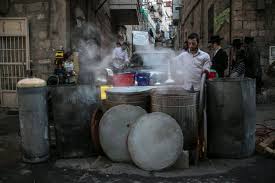
The shut down raises up questions, mostly for the Orthodox community. Due to the new regulations they are not allowed to perform many of their Passover rituals: Hag-Aa-Lah (a process of making utensils and dishes kosher and pure by immersing them in boiling water in the synagogue’s court); Bi-Oor Cha-Metz (the burning of unleavened bread); immersing in the Mikveh; praying at the wailing wall, etc.

Many such rituals have been ruled by the Rabbis since the destruction of the Temple in 70 AD. With no ability to sacrifice and shed blood, the nation needed a way of cleansing and purification.

On top of that, they cannot meet together, not even the minimal required number of 10 to form the Minyan (quorum), that enables them to say certain prayers.

hagala


(Olivier Fitoussi, HaAretz)

The Rabbis have taught for centuries that prayer and study of the writings of the Sages is what preserves our nation, protects us, cleanses us. Now they find themselves at a strange junction, forced by circumstances. The majority of corona infected patients in Israel are from the Orthodox community, mostly because of their crowded lifestyle and struggle to adhere to the new regulations.

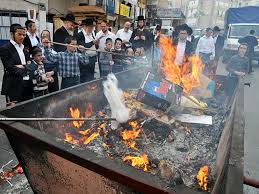
One example: every year, on the morning of Passover eve, they collect the unleavened products they still have at home and burn them in a special community waste bin. Actually, they ensure their homes are rid of any leaven a few days earlier, and they leave a few crumbs in a hidden place in order to perform a ceremony. The crumbs are collected on Passover morning, taken to the bin, and burned by a special man, appointed for the task. But this year it was forbidden, so the Rabbis declared that the crumbs can be flushed down the toilet.

I like this solution, but that raises up new questions. If this solution works, than who needs the complicated and expensive provisions they declared as necessary all these years?

biur2

Burning of the leaven
(Photo credit: JDN)

An exceptional picture caught my eyes last week:

WhatsApp Image 2020-04-01 at 4.42.34 AM

Spraying and disinfection for Corona at the Western Wall
(Photo credit: AMMAR AWAD/ REUTERS, HaAretz)

They are spraying the Western Wall, The center of Jewish prayers for centuries. If prayer is indeed the mean to achieve cleansing, than no spraying should be needed here. This should be the safest place on earth these days. And yet…

A few decades before the Temple was destroyed God had provided a solution, His ultimate mean of cleansing. But the majority among the Jews could not see it because of a severe punishment Israel was under back than, and is still under. It is called “Hidden Faces” (see Faces or a Mask? (A Midrash for Shavu’ot)

The neighborhood I live in, in the center of Jerusalem, has many community synagogues. They are all shut and inactive. I see some of their regular members walking around, keeping distance from one another, longing to go back to routine. And it stirs up in me a prayer that I never really prayed for them:

Abba, what an amazing plan you got into action when you sent your son as our Passover Lamb. You have granted me such a measure of grace when you chose to reveal Him to me as my Jewish savior; when you softened my heart so that I could bring Him into my heart, into my home. I am praying for the same grace over the Orthodox community.

I am not asking that you will help the observant Jewish community find peace where they are disturbed and restless. On the contrary, I am asking that you will use this unique time to stir within them a deep awareness, a sobering understanding that there must be a different mean of cleansing than those they relied on all these years. If the Western Wall needs to be cleansed and the other rituals can be replaced by simpler actions, than shake some of their foundations, and cause them to lift their eyes higher, above the rulings of their Rabbis, and to seek the God that does not change His mind and does not depend on circumstances. I ask it in the name of The Lamb, who paid the price in full.

Communion and Two Altars (2)

(Altar Series   |   part 2)

Egypt, Second Millennia BC

After more than 400 years, the ability of the Hebrews to control their lives was so limited. Maybe they could choose what their lunch would consist of – be it fish, melons or cucumbers (Num. 11:5), but from sunrise to sunset there were guards whipping them, telling them where to go and what to do. After centuries of enduring this routine – they were slaves not just circumstantially, but mentally as well.

One miraculous day God answers their cries, and leads them to a promised land. These broken hearts, with a limited ability to make decisions, initiate, make any kind of change, turn within a short span of time to a nation, children of God, priests and warriors. How did this transformation transpire?

IMG-20200401-WA0016

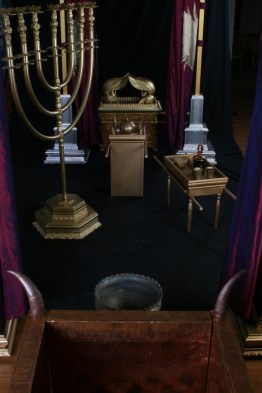
The answer is the Tabernacle. God commanded them to erect a structure in their midst, and then set each of its instruments in its destined place. As chaos made room for order, an amazing thing we all long for happened – God filled that structure with His glory.

Here and Now, These End of Days 

In some ways we too are enslaved, longing to put an end to our wanderings. Our menu may include more than fish, melons and cucumbers, and on more sane days we can even choose which restaurant to go to. But there are still these vicious guards within us, who keep a watchful eye, decide how we act and what we do and have an amazingly loud voice within us.

Oh, how we yearn that whoever looks our way will not see our shortfalls and sins, but only the glory of God filling us. Not shame and guilt, but a thick cloud of glory.

For God’s glory to tabernacle in us we have to get to the Holy of Holies. Which means we need to do what the priests did in the Old Testament. They did it externally, on behalf of the nation. We are called to do it internally, as we are all priests unto Him. How do we do that?

“The Pattern Which I Show You”

“Make this tabernacle and all its furnishings exactly like the pattern I show you” (Ex. 25:9).

On mount Sinai God provided Moses an explicitly detailed list of materials, shapes, measurements and colors. He also showed him an actual Tabernacle, a large and perfect one that was not created by man, and that exists still today (see Heb. 8:2, 5; 9:11).

The English uses various alternatives when it translates the verb “to tabernacle”. Sometimes it is translated into dwell, make a home, abide. But in Hebrew it is almost always about Tabernacling. For exmple:

“Shout and be glad, Daughter Zion. For I am coming, and I will tabernacle among you,” declares the Lord.“Many nations will be joined with the Lord in that day and will become my people. I will tabernacle among you and you will know that the Lord Almighty has sent me to you”  (Zec. 2:10-11).

The pattern God used back then is still valid. We first need to present before God the materials we have in our personal wilderness. For the Israelites these were mostly the bent, lean and thorny acacia woods. These are most likely a carpenter’s nightmare, but that was the only building material available where they were. For God that was certainly sufficient. After all, the goal is His glory to be seen, not our abilities.

He does not expect us to produce cedar trees we do not have, or import them from elsewhere. That’s what David did in order to erect a magnificent temple, but this was not God’s original format for worship.

So How Do We Do that?

Communion sums it up well. It did not start when Yeshua commanded His disciples to remember Him. It started millenniums earlier, when God turned these slaves into priests and warriors.

Moses sprinkled blood on everything, even on the priests’ ears and thumbs; So it always starts with blood (even the 10 plagues, interestingly, started with blood). And it ends with a torn flesh, that made a way for His Glory to be seen.

So when we take the Wine and the Bread, we should sprinkle blood on a certain piece of flesh inside us that needs to be torn. That will make a way for the King of Glory to enter in and tabernacle within us.

Let me connect this post to my previous one and say at this point: Communion runs between both altars – the Bronze and the Golden one.

The Brazen Altar of Blood 

Moses’ words are echoed in what Yeshua said to His disciples shortly before Passover (Matt. 26:28):

“Behold the blood of the covenant, which the Lord has made with you” (Ex. 24:8).

Moses said it after taking blood from that Brazen altar, which atoned for those who regretted their sins. That was then. How do we do it today?

Here is a very short explanation of what needs to take place within us as we apply each instrument found in the Tabernacle.

We build an Altar of bronze within us when instead of accusing and isolating ourselves in face of insult and pain, we take responsibility of our reactions to what other people’s actions stir within us. Simply put, we sprinkle His blood on our wounds by choosing to respond with repentance and forgiveness.

IMG-20200401-WA0017

When we take communion, we remind ourselves the price Yeshua paid so that we do not have to repeatedly slaughter and sprinkle blood by the altar; that His blood is readily available.

All we have to do is remember and internalize. All of the Jewish calendar and the various Biblical ceremonies are an appointed opportunity to remember what has already been achieved, or what will be done. Communion is no exception.

The Laver

This is where the Word should wash our understanding (Eph. 5:25-27b), until gradually our thoughts align with His.

The Screen

When we regularly sprinkle Yeshua’s blood over our thorns (by repentance and forgiveness), and wash in the Laver (through study of Scripture), at some point the screen inside us between the court and the Holy Place is pushed aside. This is when we enter into a more intimate place with God.

The Menorah

Every day, at dusk, the priest would light the Menorah, and every morning he replaced burned wicks and cleaned the candlesticks (Ex. 30:7-8). We too must face it regularly and allow the Holy Spirit to shed His light on our hearts. That is when we start recognizing lies and wrong perceptions that make us tick (lies such as: God loves everyone, but not me; He is faithful… but not to His promises to me).

The Table of Showbread

12 loaves of bread were put on the table and replaced once a week (Lev. 24:5-9). The Table also represents the Word, but in the form of bread. At this point we need to replace what was exposed by the Menorah with God’s truth.

However, it is not enough only to recognize what Truth stands in contrast to these lies. We must also consume that Truth, take it in to deep places within us, that are hidden from sight.

“You desire truth in the inward parts, and in the hidden part You will make me to know wisdom” (Ps. 51:6).

Yes, God wants His truth to reside in the innermost parts. In another psalm David phrases it even better:

I delight to do Your will, O my God, and Your law is within my intestines (Ps. 40:8).

The Hebrew does not speak here of the heart, but of David’s digestive system. When God’s truth is chewed and swallowed, it becomes an inherent part of us, it changes us from within. Our struggles and pain are the way our loving Father rebukes His children to bring them to repentance (Rev. 3:19). He uses hardships to remind us how hungry our intestines are to the true Bread that comes from heaven.

IMG-20200401-WA0018

When I build a Tabernacle within me (as I deal with one problematic issue or another), I literally set a table at this stage: I prepare a stack of cards with verses that declare the exact opposite of the lie that was exposed by the Menorah.

I love the way Jeremiah phrased it:

Your words were found, and I ate them, and Your word was to me the joy and rejoicing of my heart” (15:16).

The Golden Altar of Sweet Aroma

This is the peak of the process. Here the priests burned incense that ascended as a sweet aroma. Today it happens when we give thanks and intercede, but only if it stems out of a place that was once hidden and sealed, and is now full of Truth. At this point I usually thank God for the way He used some of my thorny areas to expose rotten roots that lied in my innermost being, and for the Truth I found at the Table.

As I chew this Truth, it gradually becomes a part of me. Thus, in a very practical way, a part of God’s Word, the Word that had put on flesh and came to this world to tabernacle among us (Jn. 1:14a), becomes a part of me.

The Veil

An unusual thing happened when Yeshua’s flesh was torn on the cross. The veil in the Temple was torn as well (Mt. 27:51). There was no more use for it, as the path to our destination, to the Holy of Holies, was opened wide at that very moment. From then on, whoever enters the Narrow Gate, can continue the process with full confidence all the way to the Holy of Holies.

IMG-20200401-WA0014

The rituals and the process of worship that took place in the Tabernacle found their culmination on the cross. There – everything happened all at once. The Entrance Gate was provided, blood was shed, flesh was torn, and all the in between became available to us.

Which is why we can now enter boldly the Holiest in a new and living way which Yeshua consecrated for us through the veil, that is, His flesh. Yes, we can draw near with a true heart and in full assurance of faith because by our faith in Him our hearts are sprinkled from an evil conscience at the Brazen Altar and our bodies washed with pure water at the Laver (see Heb. 10:19-20, 22). Hallehu Yah!

Glory

Father of glory, give us the spirit of wisdom and revelation that we might know You (Eph. 1:17). What a privilege it is to know that Your glory can fill the very places in our lives that cause us so much shame.

We want to live our lives between the two Altars, with the assurance that Your blood purifies us and Your Word washes our understanding. That your torn body, when it tabernacles within us, gradually fills us with Your Glory, grace and truth (Jn. 1:14).

Blessed are You, our God, King of the universe, for satisfying the desire of every living thing (Ps. 145:16), for bringing forth the true Bread of life from the earth, and the true Vine; for setting a banquet Table within us every time we invite You into our innermost being.

IMG-20200401-WA0010

From altar to throne
By SigneSandelin, DevianArt

Lift up your heads, all these locked gates within us, so that the King of Glory will come in. 

Between Two Altars (1)

(Altar Series   |   part 1)

If the present pandemic would have erupted in the days of Exodus, they would have created some kind of a quarantined section outside the camp. The priests would have examined the state of the patients every few days, and when the symptoms would disappear – they would be sent to the Tabernacle with a suitable sacrifice.

index

Would the Courtyard be under quarantine restrictions? Hmmmm….

There were two altars in the Tabernacle (and later in the Temple). One made of bronze, the other of gold. The Brazen altar was the biggest instrument found in the Tabernacle. And it was located in the courtyard. Which means everyone could see who was coming in and going out, and based on the type of sacrifice they were bringing, assume just what kind of sin they were repenting of. Quite embarrassing.

 IMG-20200324-WA0039

If it were up to me, I would have switched between the two. Why does everyone need to know what exactly I did wrong, and see me repent publicly? Not to mention the strong smells and scary sights found by that altar: particles of flesh, blood, fire, death and smoke. I’d much rather be seen by the Golden altar, while I burn incense of prayer, praise and worship before my Beloved; where the aroma is sweet and the sights aesthetic.

Does Everyone Need To Know?

But that is the nature of sin, and that is how the Corona Virus works too. It incubates in an unseen realm, its symptoms are not always immediate, yet it spreads rapidly. One little sneeze, and the entire surrounding is affected. One little word I’ve misspoken; one nugget of gossip that may be entertaining those who share it, but is infecting others with shrapnel; and that addiction I think affects only me, but in the spiritual and unseen world causes damage to a spiritual Body.

The treatment for both also runs in parallels: quarantine, or sent outside the camp. And of course, everyone around is notified. Humiliating? Yes, to a degree! But that is the only way to bring an end to it.

When I truly repent of something, when I get to that place inside me that is so ready to change direction and set my eyes – not on others who are ministering in the Court, not on my usual diversions and indulgences outside the Gate – only towards the Holy of Hollies, then I don’t even care if others hear or watch or know. I so much want to see a lasting change, and to stop affecting others by my wrongdoings, that I don’t really mind if others see it. On the contrary, I want people to know that something had changed.

Shaking

When this present situation will be all over, will everything go back to the way it was before? I am asking God to help me make the most out of this unique situation. I do not want to regret not using this down time to go deeper, or untie some ancient bonds, or develop a new habit that I know is good for me but “who ever has time for that…”

Social media is full of theories concerning what the Corona is meant to achieve in the kingdoms of darkness and conspiracy. Some of these theories are scary and intriguing and certainly possible. But they take over my time and mind. I would prefer to know what is God planning to achieve through that. The enemy may try to shake us in order to establish his order, but God has a way to use these shakings. He shakes us every once in a while, not so that we lose our faith, but in order to build and edify it (Mark. 14:31).

Nearly 37 years ago I chose to enter His Courts through the one and only Gate that leads to the Holy of Hollies. Since then I need to make a repeated choice: to stand by the Brazen altar. There I leave various feelings, thoughts, memories and reactions that have no place in God’s kingdom. I love seeing how He conquers every such territory with His weighty glory.

Incense Prayer – The “Pitum Haketoret”

Since the destruction of the Temple on 70 AD, the daily commandment to burn incense on the Golden altar is no longer applicable. The Pharisees found creative solutions to bypass the blood and sacrifice requirements. Various prayers were put together to replace the different ceremonies taken place in the Temple, in an attempt to provide what both altars were meant to provide: atonement, forgiveness, repentance and a sweet aroma.

God’s commandment to burn incense daily on the Golden altar, as the sun was setting (Ex. 30:1-10), was substituted by a special prayer, called “Pitum Haketoret” (The Compounding of the Incense). It’s a combination of various psalms that refer to the different ingredients of the incense. This prayer is said until this very day in synagogues.

Kabbalah literature (the ancient Jewish mystical interpretation of the Bible) teaches that declaring the “Pitum Haketoret” can put an end to a plague. The claim is based on Numbers 17:47-48. But this is one more case where Rabbinical Judaism is bypassing the importance of blood. Most of its rules and regulations are based on parts of stories in the Bible, at times even parts of verses, taking things out of context.

Look at v. 46: “Take your censer and put incense in it, along with burning coals from the altar, and hurry to the assembly to make atonement for them. Wrath has come out from the LORD; the plague has started”.

Moses commands Aaron to take the censer and put fire in it. Where did he get the fire? There was only one source of fire in the Tabernacle: the Brazen altar. Which means that the fire was saturated with the blood of sacrifices. It was not the incense that provided atonement and put an end to the plague, it was the combination of coals sprinkled with innocent blood and sweet aroma.

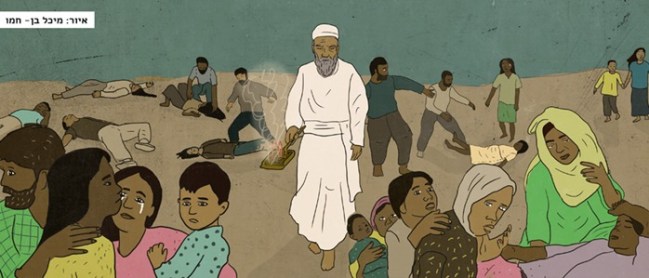
Just a few short words are used to describe Aaron’s running to and fro between the two altars, in a scene that conveys much courage and stress. With every second that passed more people were killed by the plague. Aaron was interceding for the people with his own body, knowing he himself can contract it, yet he knew that the censer in his hands was purified.

The Challenge

We all want to be seen when we are at our best. We prefer that people hear our carefully crafted prayers, the ones that carry a sweet aroma of perfumed incense, and our worship and praise. We are happy to share the altar of gold found within us, but let us not forget you don’t start there. You have to go through the bigger altar for your prayers to produce that desired sweetness. The Golden altar is smaller, located in an intimate section of the Tabernacle, far from sight.

When a plague erupts, whether it looks like a miniature ball with a crown of strange arms, or be it some hidden sin that is spreading unseen through us, God is calling us to come to the outer altar, the one saturated in blood and exposed to the public. There He commands us to burn the sin and let go of any foreign fire we hold on to. To confess, forgive, change direction.

Humiliating? Yes. But that’s the only way leading to His Glory, the only way Aaron had put an end to a plague.

IMG-20200324-WA0040

Running between two altars, and among a dying nation
(Illustrated by Michal Ben Hamo)

Abba, how privileged we are to have a High Priest who runs on our behalf between both ends – stopping plagues with His own blood, and receiving our sweet praises when they ascend to His throne. There is an appropriate time for each of these, please teach us to not confuse the two or neglect one of them.


An Ear

This is somewhat of an awkward post. But since it sits deep in my heart, I think I should give it its right to exist outside of me.

Something special happened to me last weekend, during a women’s retreat in Israel. At some point, while we were worshiping, I felt a new place opening within me. A deep and bottomless well, covered with an ear. A beautiful, gigantic, baby-like human ear, lying horizontally, and covering the opening of the well. It is an attentive ear, absorbent and able to contain and hold everything.

ear

My natural ears are limited in their ability to absorb impressions and stimulation. They sift the noise and voices around me, and transfer information to my brain, which is so quick to categorize and store whatever it can take. Everything else is thrown away. These limitations do not apply to my inner ear. This one can gather an abundance, for it sits on an enormous well.

One of the first things God said to me when He invited me to join His kingdom was based on Proverbs 3:5-7: “Trust in the LORD with ALL your heart, and lean not on your own understanding. In all your ways submit to him, and He will make your path straight. Do not be wise in your own eyes; fear the LORD and shun evil.”

At first, He spoke it gently: “Please, Orna, do not lean on your own understanding. Let me guide you in all your ways.” But with the years, the statement became more forceful, for I tend to lean on my own understanding and abilities before I look unto Him. I sift, categorize, try to figure things out before I say “yes” or recognize that it was the Beloved of my soul who was speaking.

Now I am in the process of learning to listen through this new huge baby ear. The realization that its there was sudden, but it is in fact a culmination of a long process, in which I have learned to invite God to sit on the throne of my heart, and understanding, and ways, and wisdom and my limited level of fear of the LORD.

When the retreat was over, I recalled a lovely portion from Isaiah: The Sovereign LORD has given me a well-instructed tongue, to know the word that sustains the weary. He wakens me morning by morning, wakens my ear to listen like one being instructed. The Sovereign LORD has opened my ears; I have not been rebellious, I have not turned away (Is. 50:4-5).

Over the years God has indeed led me in learning how to study and teach His Word. He equipped me to counsel the weary and the broken hearted, to open my ears in the morning and heed His teaching. And now, to paraphrase V. 5, He has opened within me another kind of ear.

It’s challenging, I have to admit. Especially when I read the rest of this portion in Isaiah. It is challenging to not rebel or move backwards, veer off to the usual ways in which I attempt to figure out how He works, what He is saying to me, where is He right now…

Purim’s Ears

Purim is here, and one of the symbols of this feast are a treat dubbed Ozney Haman (Haman’s Ears). It’s a somewhat repulsive name for a cookie that is supposed to be so delectable. The name is a distortion of its Yiddish name. MOHN is poppy seeds, and TASCHE means pocket. Hamantaschen are pockets of dough filled with poppy seeds. Yep, they have nothing to do with the same Haman mentioned in the book of Esther. But the shape of the cookie, the Yiddish name that resembles Haman, and the traditional filling of poppy seeds… well, I don’t want to spoil your appetite.

Some historians believe that the custom of eating Hamantaschen is a result of the ancient practice to cut off criminals’ ears. After all, who knows? Maybe Haman’s ears were cut off before he was hung? At least that’s what the Talmud claims (Megillah, page 16).

Others say the custom has its roots with another Haman, a different enemy of the Jews who lived in Frankfurt, Germany. This one was a baker who dubbed himself as the “new Haman”. In 1615 he headed a pogrom against the Jews of Frankfurt, which led to their exile from the city. They wandered in great poverty for six month, until he was arrested and they were allowed to return. The baker was executed in the town square, and apparently, before he was beheaded – his ears were cut off.

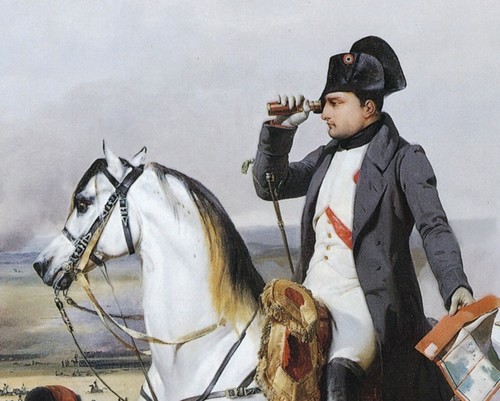
Other surprising explanations have to do with the triangulated officers’ cap, much like the one worn by Napoleon, and the possibility that Haman the Agagite wore a similar hat.

Another explanation states that the custom of eating these cookies is borrowed from the Christians, who used to eat stuffed triangle shaped cookies on the Friday before Easter. These cookies were called Judas’ Ear, and were shaped like a mushroom. The story behind was that on the tree upon which Judas Iscariot hung himself, grew a mushroom shaped like an ear. It is possible that the Jews in exile decided to turn the custom around, and due to its proximity to Easter, they chose to ascribe the triangulated cookies to one of the greatest enemies of our people, and make it abundantly clear who’s the real victim here.

One way or another, it is a delectable treat with appetite-destroying stories associated with it. We have turned the custom of eating these cookies into tradition, though they have nothing to do with the story of the book of Esther. Like that should stop us from kneading dough and fixing fillings, or making a quick trip to the nearest counter and filling our mouths with sweet dough? I counted: there are 166 steps from my house to the nearest bakery!

Shema, O Israel, Open Your Inner Ear

This blog is not about folklore, but about the restoration of Israel from her blindness, deafness, the fat around her heart. In line with this post, I’d like to recruit you to pray for our ability to listen and hear as a nation. God spoke to us with voices and lightning on Mount Sinai, and even though Jews believe that since the prophet Malachi, His voice has not been heard from heaven, He still speaks in many ways to this very day.

The abundance of blessings He bestows upon us does not necessarily open our ears and direct us to Him. Sadly, in many ways it only strengthens our leaning on our own understanding, on our military force, on our own abilities and wisdom.

As the Corona virus spreads worldwide, it becomes harder to travel and gather together. One of the immediate effects is on congregational worship. Should we avoid large meetings, or continue with our routine? We should not act out of fear, but where does the fine line between fear and caution lie? There are many aspects to the Corona frenzy. But it can also have some good sides, if you choose to use this challenge as a training season. Here is an opportunity to collectively practice our “SHEMA” skills and sharpen our ability to hear the Lord. We have an opportunity to adhere to His guidance in a way that will breathe life and courage into our surrounding, in the midst of paralyzing fear at times. I have a feeling that this is a skill we will all need at some point.

ear2

Please, Oh Lord, have mercy on our nation. Awaken our ears individually and nationally and give us a heart that is able to receive instruction, listen and learn. Soften our hearts so that we will recognize your voice. Give us an ear that yearns for your voice through the night, and hungers for it in the morning, so that we may fulfill our calling to bring your Word forth, shine your light and advise the weary.

You have paid the full price for this ear to open, but we were deaf enough to not recognize you. Your Faces have been hidden from us for centuries, to the point that even when you walked in our midst, we did not realize who you are.

Father, you are so hidden in the book of Esther, not even mentioned once. Yet it is so clear that it is your mighty hand pulling the strings behind the scene. Yeshua, reveal your Jewish Face to us. Our ears have been dull, and our eyes closed for centuries (Is. 6:9-10). But we ask you to turn things around and help us sober up and utilize our listening ability to the fullest.

A Historic Hour

In light of all the diplomatic developments and the great historical hour, as it is being dubbed, what do Netanyahu and Gantz have left to do, except band together and advance this Deal of the Century?

Did Trump, knowingly or not, created a situation in which Netanyahu and Gantz can unwind themselves from the choke hold of the party association they have created for themselves from the left and right of the political map in Israel, and actually unite? Have Trump and Kushner managed to accomplish what two surreal elections, with a third one coming up, have not been able to? That is – uniting the two central blocks in both the left and the right wings of the political map in Israel, and launch the 2020 version of the Oslo accord?

Truth is I am not that familiar with all the details – neither of the Oslo accord, nor any of its offspring, whatever their names are, including this latest one, the Deal of the Century. In its most basic form, I see no significant differences between all these deals. Except for the color of the maps, that is. I guess that’s a matter of style – after all, I used to like pink once too.

מפה תוכנית המאה הסכם אוסלו ()

Right map – the map of Israel according to Oslo (the pink areas were supposed to become the Palestinian state)

On the Left – Trump’s version (green areas are the Palestinian presumed state)

Are the differences between the Deal of the Century and its precedings (going all the way back to the very first Plan of Partition the UN came up with in 1947) really that significant? As a business man, Trump addresses the issue from a business perspective and is focusing on the financial gain of both sides. He keeps saying that Jerusalem will not be divided, yet the details clearly show that it will. They’re just not going to call it division or partition, but rather use some other phraseology, and create big parts of it underground, so that it will look as connecting roads and not as a division. Brilliant!

I did not start this blog to focus on politics or trivia, but on the brokenness of Israel and its transformation from a Widow and bereaved nation into a Mother-nation, on her way to become a Bride; and also on the recruiting of “Ruths” alongside “Naomi”. This is my passion and my calling, until that day when we shall see this nation dwelling in peace and tranquility under the vines and fig trees of “Boaz”, as she returns to her pre-destined purpose – to be a teacher, a light, and salt to the nations.

Fill Up Your Quivers

So… precious readers, let me ask: what is it that normally lights a fire in your hearts when you hear about events concerning Israel and the nations? Is it the End of Times? The division of the Land that God has promised His people? Righteousness versus corruption in the Israeli society, affecting even our top leaders? Perhaps the next elections? Or maybe it’s humanitarian issues: our treatment of the Arab population and foreigners who live among us, holocaust survivors, orphans, widows, the believers in Yeshua?

It is time to arm ourselves with sharp arrows from the Word of God – with verses that clarify what God has to say regarding any of these subjects, and start shooting them at the target through faith-filled proclamations. For these arrows of truth will not be put aside until someone comes up with another version, adorned with just the right colors and shades. They will not return void, but will do what they were designed for in the mind of the God of Israel.

fishing archery #archeryfishingtips

Here are a few examples of the arrows found in my quiver. Feel free to borrow these, or come up with your own:

God’s policy in regards to the Middle East: 

This is what the Lord says: “As for all my wicked neighbors who seize the inheritance I gave my people Israel, I will uproot them from their lands and I will uproot the people of Judah from among them.  But after I uproot them, I will again have compassion and will bring each of them back to their own inheritance and their own country. And if they learn well the ways of my people and swear by my name, saying, ‘As surely as the Lord lives’ – even as they once taught my people to swear by Baal – then they will be established among my people. But if any nation does not listen, I will completely uproot and destroy it,” declares the Lord (Jeremiah 12:14-17).

And afterward, I will pour out my Spirit on all people. Your sons and daughters will prophesy, your old men will dream dreams, your young men will see visions. Even on my servants, both men and women, I will pour out my Spirit in those days. I will show wonders in the heavens and on the earth, blood and fire and billows of smoke. The sun will be turned to darkness and the moon to blood before the coming of the great and dreadful day of the Lord. And everyone who calls on the name of the Lord will be saved; for on Mount Zion and in Jerusalem there will be deliverance, as the Lord has said, even among the survivors whom the Lord calls (Joel 2:28-32).

Holocaust survivors:

But I will spare some, for some of you will escape the sword when you are scattered among the lands and nations. Then in the nations where they have been carried captive, those who escape will remember me – how I have been grieved by their adulterous hearts, which have turned away from me, and by their eyes, which have lusted after their idols. They will loathe themselves for the evil they have done and for all their detestable practices. And they will know that I am the Lord; I did not threaten in vain to bring this calamity on them. This is what the Sovereign Lord says: “Strike your hands together and stamp your feet and cry out ‘Alas!’ because of all the wicked and detestable practices of the people of Israel, for they will fall by the sword, famine and plague. One who is far away will die of the plague, and one who is near will fall by the sword, and anyone who survives and is spared will die of famine. So will I pour out my wrath on them. And they will know that I am the Lord, when their people lie slain among their idols around their altars, on every high hill and on all the mountaintops, under every spreading tree and every leafy oak – places where they offered fragrant incense to all their idols. And I will stretch out my hand against them and make the land a desolate waste from the desert to Diblah – wherever they live. Then they will know that I am the Lord (Ezekiel 6:8-14).

And free those who all their lives were held in slavery by their fear of death (Hebrews 2:15).

Restoring Israel from her widowhood:

The Lord will call you back as if you were a wife deserted and distressed in spirit— a wife who married young, only to be rejected,” says your God. “For a brief moment I abandoned you, but with deep compassion I will bring you back.  In a surge of anger I hid my face from you for a moment, but with everlasting kindness I will have compassion on you,” says the Lord your Redeemer. “To me this is like the days of Noah, when I swore that the waters of Noah would never again cover the earth. So now I have sworn not to be angry with you, never to rebuke you again. Though the mountains be shaken and the hills be removed, yet my unfailing love for you will not be shaken nor my covenant of peace be removed,” says the Lord, who has compassion on you (Isaiah 54:6-10).

Restoring Israel’s relationship with God:

Hear the supplication of your servant and of your people Israel when they pray toward this place. Hear from heaven, your dwelling place, and when you hear, forgive (1 Kings 8:30, ff).

Acting and living righteously:

In righteousness you will be established: Tyranny will be far from you; you will have nothing to fear. Terror will be far removed; it will not come near you (Isaiah 54:14).


That Little Man In The Eye

“The gates of hell opened wide on January 27, 1945”. This was the opening statement of Israel’s President, Reuven Rivlin. He spoke yesterday during the main event held at Yad VaShem museum in commemoration of International Holocaust Memorial Day. Rivlin referred to the liberation of the Aushwitz-Birkenau concentration camp.

This event is commemorated world wide since 2006. In previous years, dignitaries and diplomats visiting Israel have been invited to this annual ceremony. This year, however, and to our utter amazement, the heads of almost 50 countries accepted the invitation. Main traffic routes from the airport to Jerusalem have been blocked, as an airlift of dozens of aircraft carried presidents, prime ministers, princes and kings from all over the world into our Capital, and the police and Shin-Bet (Secret Service) were on high alert to ensure the safety of the event.

דגלי המדינות על חומות ירושלים // צילום: יהודה פרץ

Images of the flags of all these countries projected on the walls of the Old City (Photo credit: Yehudah Perez)

When Volodymyr Zelensky, the Ukranian president, found out that due to the large number of dignitaries there was hardly any room left for holocaust survivors to attend, he moved hearts by relinquishing most of the seating spots allotted for his delegation.

Frank-Walter Steinmeier, the German president, surprised the audience when he opened his speech in Hebrew and pronounced the “SheHecheyanu” (the blessing recited upon a noteworthy achievement, commencement of a feast, high holiday, etc.) [https://www.inn.co.il/News/News.aspx/425243]. He stated that he wished his nation has learned its lesson, but in light of the rapidly growing hatred towards Jews in Germany, he is not able to do so.

At Sacher Park in Jerusalem a monument was built to commemorate the heroism of the victims of the Leningrad siege during WWII. President Putin arrived to take part in the event – that was the formal reason.

בנימין נתניהו עפ נשיא רוסיה ולדימיר פוטין טקס חניכה אנדרטה גן סאקר ירושלים (צילום: עמית שאבי)

Netanyahu and Putin unveiling the new monument yesterday morning
(photo credit: Amit Shabi)

אנדרטה המצור על לנינגראד (צילום: הקונגרס היהודי האירו-אסייתי (EAJC))

The Memorial Candle Monument (photo credit: EAJC)

Around 1 pm, all the dignitaries had already arrived at the special tent built for the occasion. President Rivlin took the stage and gave his moving speech. As he was closing, Putin entered the room. Some commentators suggested that his late arrival was strategically planned, carrying a message that says: “I am the top leader here, the strong man”. Some even say that Putin was involved from the get go in all the details of the ceremony, and that every details was well planned and thought by him.

Each year Israel chooses a different theme to focus on during this event, a theme related of course to the Holocaust and WWII. The main goal this year was to raise international awareness to the new wave of antisemitism across the world. Judging by the speeches and the responses of the audience present, this goal was achieved. The event received much media coverage and will continue to do so in many countries. But will the movies presented and the statements made turn back the wheel of antisemitism that is already rolling with much force? Too soon to tell.

The Little Man in the Eye

The Hebrew word for the pupil of the eye is “Ishon”. It means a tiny or little man. Scripture calls Israel the apple of God’s eye (Zec. 2:8; Deut 32:10). The Hebrew words used here refer to the most precious thing, to the pupil of the eye. Israel is that little, tiny precious man, sitting right in the middle of God’s eye.

Try to reach out and touch your pupil with your finger. It’s impossible! Your eyelids will close in an immediate response. And if somehow you are able to touch it, it will immediately cause tears to flow.

Think of touching the pupil of God’s eye. The truth is it is possible. Apparently, many people and nations have done so throughout history. They did not just touch it, they have trampled it. And to their own end, they have caused him to shed many tears and bring judgement on themselves (e.g. Isa. 10:5-16; Amos 1-2; Zec. 1:15).

When one draws near to God and learns to think His thoughts, they must see Israel in His eyes. You can’t draw near to Him without seeing what is reflected in the apple of His eye. And you can’t understand the signs of the times without seeing Israel there.

As I was praying yesterday with my intercessors, one of my “Ruths” on the team explained that the pupil of the eye serves as a gate. Light enters the eye through it, so it can be focused on the retina and begin the process of sight. Israel’s calling involves seeing through the prophetic eye of God’s pupil. Only with Israel in sight can a nation fine-focus its spiritual pupil and position.

In the past few weeks, as the Israeli media started talking about yesterday’s event, it mostly focused on the many expected traffic jams. I was wondering: why are all these important people coming? This is not the first time International Holocaust Remembrance Day is commemorated. What is behind this Mega-event? Is it a front for something entirely different?

Is there a conspiracy taking place? Maybe. This is always a fascinating possibility, even when it is unlikely. Maybe it’s another opportunity (perhaps the last one?) for all these big wigs to see Israel commemorating one of its horrors, and to choose (again, for the last time maybe?) whether they will rise against God, or look Him in the eye and see us through Him, and Him through us?

Have mercy, O God, on all the Cyruses and Nebuchadnezzars you have elected from before the foundation of the earth. You know which of them is a vessel of honor, and which is of disgrace; who among them will harden their hearts, and who will allow Your strong and mighty Arm to soften their necks. And still we ask, Father, have mercy. The same grace and mercy you have granted your people Israel, when we were so unworthy, please grant to the nations of the world who walk in darkness; who think they look You in the eye, not realizing they either look down at You, or into an eye that only pretends to be You.

I also ask you, Lord, to help Israel lift our eyes to You. In the face of more antisemitism on one hand, and a growing approval of nations on the other, keep us from being deceived and numb. In the name of what Yeshua had accomplished for us I ask: keep us from relying on a modern version of “a staff of bruised reed” that will lead us astray from our calling: to reflect your Heart and your eye. 

Between Jerusalem and Athens

The Greeks

Zionism has had a long love story with Hannukah. It gladly adopted the holiday’s narrative. Up until the first waves of Aliyah to Israel begun (towards the end of the 19th century), Jews celebrated mostly the religious aspect of this feast, as the focus was the miracle of the cruse of oil that held for 8 days. The modern Zionist movements were those who inserted the aspects of heroism, victory of the few against the many, and that of the sons of light over the spawns of darkness. These all fit like an elegant glove to the Zionist hand. In many ways, modern Israel was perceived as a modern version of the Maccabees.

Back then, for 400 years the kingdom of Judah was enslaved by the Greeks, until the Hasmonean revolt broke in 167 BC, in reaction to the bitter decrees handed down by the Greek ruler Antioch Epiphanes. He massacred Jews, forbade them from keeping the Shabbat, executed women who circumcised their sons (a fascinating study in and of itself – the fact that the women were those who circumcised the newborn males at the time, not the men), and desecrated the Temple by erecting a statue of a Greek deity inside it. At some point, a Hasmonean priest, named Matthathias, proclaimed: “Let everyone who has zeal for the Law and who stands by the covenant follow me!” and with that had lit the match that started the great revolt.

But Then, Things Took On a Wrong Turn

Matthathias reacted to the ongoing process of Hellenization and assimilation that the nation was going through, not only to the abominable statue that was placed in the Temple. However, what began as a fight for religious freedom led to a religious enslavement by choice. Matthathias’ descendants, the Maccabees, gradually took over the priesthood by means of corruption. The Bible makes it clear that the high priest must come only from the house of Zadok, a descendant of Aaron. The Maccabees bought their way into that unique position through bribing the Greek rulers. Gradually, they accepted the Hellenistic culture as well, with its idolatry and polytheism that their forefather fought against.

Wanted: A Heroic Story

The Talmud says very little about Hannukah. Many historians believe that was done on purpose, since for centuries the story of the Maccabees was considered to be as soured wine. But then the Zionists thinkers brought Judah the Maccabee into the forefront of the collective Jewish recognition. From the feast of Latkes and the miracle of the cruse of oil, Hannukah turned into a celebration of heroism. The Jewish papers from that time report of Hannukah banquets, celebrating the spirit of heroism, calling for a modern version of a renewed independence in the land.

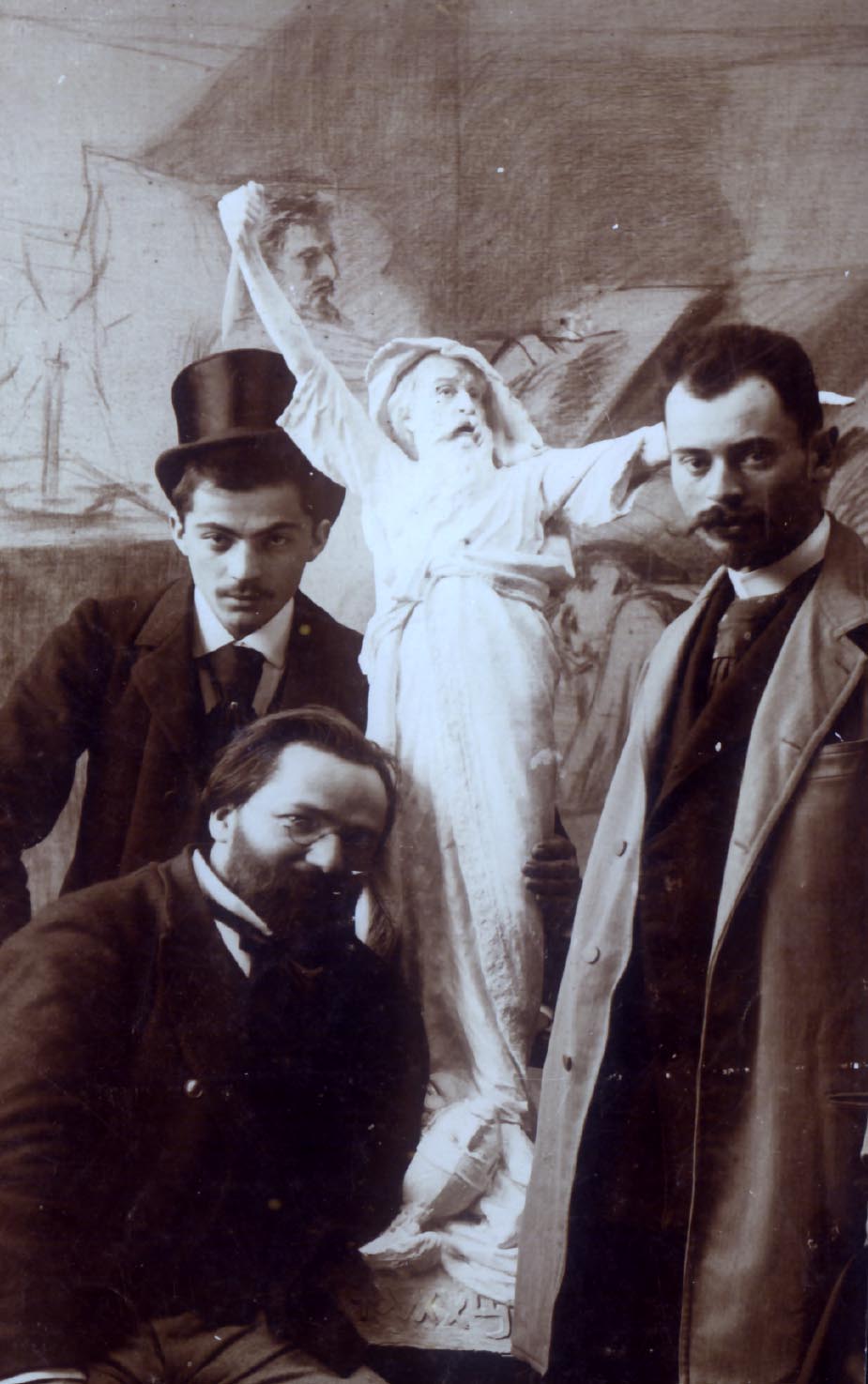
The artist Boris Schatz established in 1906 the Bezalel academy of arts in Jerusalem. Several years earlier he created his most famous sculpture – “Mattathias the Hasmonean”.

Boris Schatz (sitting, bottom left, 1867-1932)
and his most famous work – Mattathias the Hasmonean

The head of the statue, a draft made of plaster

Sadly, this is the only part that survived,
stands today at the Tel Aviv Museum of Art (picture taken by Yair Talmor)

For Schatz, Mattathias symbolized the warrior Zionist. In 1907 Schatz held a Hannukkah party at the academy, and set this sculpture in the court yard. No one could have predicted the debate that erupted the following day in the local newspapers. Schatz’s supporters claimed that the Zionists are the Hasmonean’s modern heirs. After all, they too were the cream of the crop of the nation! Well, at least before they became corrupt.

Schatz opponents, however, claimed that the sculpture is an abomination, for Mattathias’ revolt started because of a statue that was placed in the Temple. And here, he himself was turned into a statue? Eliezer Ben Yehuda, who was scheduled to give a speech at the party, was unable to do so. The following day he described it well in his newspaper: “I refrained from speaking facing the statue…. for the eyes [of Mattathias] bore at me with rage, for he fought with conviction against those who erected abominable images, and here you erect a likeness of him?”

The Sons of Zion Against the Sons of Greece

Hannukah represents the friction between Athens and Jerusalem, between the worldly wisdom of Greece and the Biblical perspective of God. The pagan chooses the idols he wishes to serve and makes them in his own image. The God of the Bible, however, created man in His own image and likeness, and it is He who chooses those who worship Him (see Is. 43:10), not the other way around. The Jewish Sages taught at first that Greece was the Evil Kingdom, and so forbade from assimilating into their Hellenistic lifestyle. But somehow, in a gradual process that goes against all reason, they adopted many aspects of that philosophy.

Today, the Rabbinical perspective is in many ways much like that of the mindset of Greece. Gematria, for example, that is so closely associated with Judaism – has its roots in the Greek culture. The images and idols the Torah forbids making, adorn almost every orthodox Jewish home (especially pictures of various rabbis). And the study of Torah, that was originally given to the people in order to draw them closer to God and teach us His ways, has become the highest value, more important than anything else (the study and debate of each word, structure and commentary, not even of what God is actually saying). Even the Rabbinic Yeshiva is in many ways built upon Hellenistic infrastructure. How has Athens managed to infiltrate into the foundations of Jerusalem?

A Menorah and Olive Branches

Three weeks following the establishment of modern Israel in May 1948, the citizens were invited to send their ideas for a national emblem. Approximately 450 suggestions were sent in. Here are some of these interesting suggestions:

Two designers, the Shamir brothers, sent their suggestion as well. As they methodically studied the various symbols of other nations, they discovered that none uses a Menorah in their emblem (yep, it turns out there are others who use the Star of David – such as Burundi; Nigeria’s flag while it was a British colony until 1957; and the flag of the Morrocan Caliphate prior to 1945).

The Shamir Brothers, Circa 1970

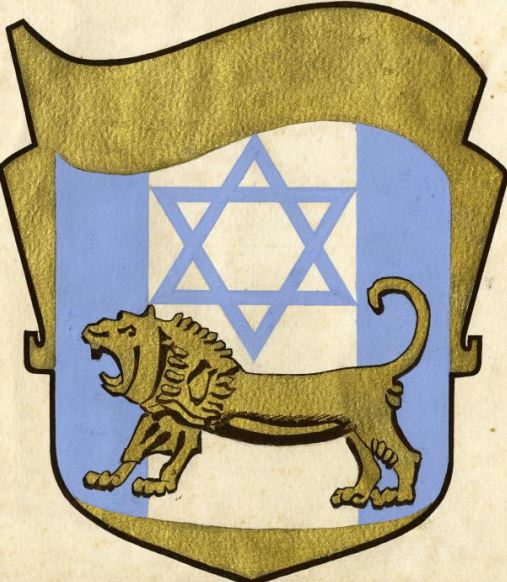
A few changes were inserted, and their suggestion was accepted:

A final draft of the National Emblem
approved and signed by David Ben Gurion, 1949

The critics of the emblem stated that this Menorah is seen on Titus gate; that it does not stand in one accord with the one described in the OT. But that was precisely the reason that Menorah was chosen: it brings together the motifs of destruction and restoration. It states: “we were exiled with much shame, but we are being restored to our original identity and are fulfilling ancient prophecies”.

Seven or Nine?

The Menorah in the emblem contains 7 arms, yet at Hannukah we light the one with 9 arms. For those who are not familiar with the Hannukah story, the Greeks plundered the Temple Menorah, the one with 7 arms. How did the Menorah become a Hannukiah then? It has to do with the shift of the national authority from the house of Zadok as the high priest to the house of Hashmonai, and later into the hands of the the Pharisees and rabbis.

If you have been following my blog for a while, then you are familiar with my theme of the Hiddennes of God. This Athens versus Jerusalem, that is the core story of Hannukah, is one more expression of that. Even in this feast of light, God’s true values, Faces and symbols are hidden from our nation.

After the disastrous Bar Kochba revolt (135 AD), the rabbis were determined to restore the nation as far as possible from Jerusalem. The city was anyway destroyed and ruined, and the rabbis wanted to gain back the favor of the Roman regime. The alternate location chosen was Jamnia. The system they came up with had purposefully detached itself from Temple rituals, from the written Word of God, even from God Himself. The changing of the Menorah is a part of this process. The rabbis forbade the creation of any vessel that looks like those that were used in the Temple (Avoda Zara 43a), so the solution was a Menorah with more arms than the original one had.

Growing up in the Israeli education system, I was always told that the Hanukiyah has 8 arms because of that miracle of the little cruse of oil. It should have sufficed for one day, yet lasted 8. However, there is no mention of that in the books of Maccabees. This is apparently a tradition that developed later on, as it is mentioned only in later writings. The book of Maccabees tells that the celebrations lasted 8 days since during the war, the nation could not celebrate properly the feast of Tabernacles. After they won the war, they could do it, and did it for 8 days.

I am personally delighted to see the emblem of modern Israel. It is based on motifs found in the Bible – a Menorah and Olive Branches – not on myths or a distorted version of God’s Word. In my opinion, there’s no small victory here for “Jerusalem”.

So What Have We Got Here?

A Menorah flanked with olive branches, and a nation miraculously renewed in its homeland, yet still so desires to be like other nations, to assimilate in their wisdom and cultures. We forget, we don’t even realize, that we were chosen to be “Sons of Zion”, not of “Greece”. These two kingdoms have very little in common, and can hardly exist side by side, if at all. So far, sad to say, Greece has held the upper hand for a “mere moment” (Isa. 54:7). But the story does not end here. The prophet Zechariah saw the day in which God will stir the Sons of Zion against the Sons of Greece. He then will be revealed, accompanied with lightning, thunder and the blowing of the shofar (9:13-17).

The widow Israel, which is turning into a mother, and a bride, is seeking along the way its identity. It was lost for that mere moment, but it is being restored with great mercies, to the point that soon, we will not even remember the reproach of our widowhood anymore (Isa. 54:4). In part our identity is based on Scripture, but too often it is laced with Hellenistic motifs, that nullify God.

IMG-20191230-WA0001

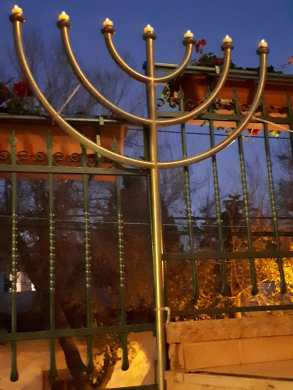
Yesterday we had lit the last candle on the last day of the feast. On my balcony, in the heart of Jerusalem, I had put up this year a huge Menorah for Hannukah. When the weather allowed, I lit it, and found myself answering the questions of passers by, who wondered where are the missing two arms. This iron Menorah is a draft someone made for the Tabernacle model I use in my seminars, but there is also a statement here – let’s go back to the original Word, with all its meanings and symbolism. Let’s not hide God’s truth. Let it shine!

Water

The synagogues in my neighborhood have been filled with dance and singing this past week. The celebration culminates tonight and tomorrow. Women, children and passers by gather outside the entrances of the tiny synagogues all over this area. I find myself astonished: such joy! The men dance around with Torah scrolls in their arms, but they don’t even realize they are carrying the true manna, the living Word. Yet I, that believe wholeheartedly that the Word had put on flesh and came to dwell within me, that when I call to Him He answers – how joyous do I become whenever I hold the Word of God in my hands?

Rejoicing over the Torah scroll. This is what synagogues throughout Israel and the world will look like tonight and tomorrow as the cycle of reading through the Torah comes to an end, and a new reading cycle begins. Taken from the Ramat Gan Yeshiva youtube page.

While the Temple still stood in Jerusalem, a special ceremony was conducted: wine was poured on the brazen altar regularly, alongside the sacrifices. But during the feast of Sukkot, water was added to the wine. This was carried with much joy and celebration, and was called Simchat Beit Hashoeva (lit. “Rejoicing over Water-Drawing”). The celebration lasted throughout the night and ended with drawing of water from the pool of Siloam (Briechat Hashiloach).

This tradition has much to do with the rain season at hand. Therefore a unique blessing, uttered only during this feast, is declared in synagogues all over the world, called “He makes the wind to blow and the rain to fall”. Rain, after all, is the main source of water for our desert-like land. Here is one of the versions of this prayer:

You, O Lord, are mighty forever, You quicken the dead back to life; You are mighty to save. You cause the wind to blow and the rain to fall. You sustain the living with lovingkindess, quicken the dead with great mercy, support the falling, heal the sick, loose the bound, and keep Your faithfulness to them that sleep in the dust.

Who is like You, Lord of mighty acts, and who resembles You, O King, who kills and raises from the dead, and causes salvation to spring forth? Who is like You, Father of mercy, who in mercy remember Your creatures unto life? Yea, faithful are You to quicken the dead. Blessed are You, O Lord, who quickens the dead. 

So in the synagogues today, Torah scrolls were taken out of the Torah Ark and passed from one man to another. The crowd circled it and danced with much joy for the fact that a cycle of the reading of the Torah has come to its end, and a new one is now beginning. Along side this cyclic reading, the people of Israel ask their Maker to bless them with the blessed cycle of rain and water.

IMG-20191021-WA0015 - Copy

What Is In the Water?

From the first verses of Genesis, it almost seems like water were always there. Even in our mothers’ wombs we grow in a sac of water. All in all, every living cell needs a certain amount of water in order to exist. Without which, it will wither and die.

Yesterday I was introduced to a term I’ve never heard before: “the anomaly of water”. Almost all substance in nature shrinks in cold temperatures and thus subside in volume. Not so with water. Turns out that water, when frozen and turn into ice, actually grow in volume and girth. This has to do with the special structure of its molecules. That is why ice, which is lighter, floats upon water and does not sink. If it were to sink, the upper layer would also freeze, leading to the freezing of the entire water reservoir, and thus life would cease to exist in the deeper layers.

Paul, Peter, James… and Water

Peter has something quite interesting to say about water. “…by God’s word the heavens came into being and the earth was formed out of water and by water” (2 Pet. 3:5). The second part of this verse can be much fodder for evolutionists, but one must not ignore how it begins. The verse sets out clearly creating a correlation between water and the Word of God.

In his letter to the Ephesians, Paul says that Yeshua cleanses and purifies His Body by washing with water through His Word, thus presenting it without stain or wrinkle or any blemish (Eph. 5:26-27). And James describes the Word of God as a mirror (1:23).

If we want to look like Him, we must check ourselves with in mirror on a regular basis, and whenever we recognize a stain, blemish or defect, we are to wash it with His Word.

I find it interesting that the Laver in the Tabernacle combines exactly these two things together. It was made of the bronze mirrors the women brought to the gate of the Tent of Meeting (Ex. 38:8), and of course – contained water. The priests approached it after ministering to the people at the gate and by the altar, and examined to see if a piece of meet, or a splatter of blood, or the dust of the wilderness had clung to them – all symbolizing the things that cling to us when we use the gifts God has gifted us with, as we serve Him and others.

How can we go through the veil and enter the Holy Place, the most intimate place within us where we can commune with God, unless we first wash all that has clung to us? How can we exist and grow in holiness without water – weather natural or spiritual? Obviously we cannot.


Our Abba in heaven, the people of Israel celebrates Your Word today and prays for water. Stir within them a hunger and thirst to your true Word. Bring them to the point in which the regulations and wisdom of men will not satisfy them any more. Lead them to the only Well that can provide them with living water, and cause rivers of living water to flow from within them.


Betrayal, Shame, and Forgiving Both Fathers

In my previous post (Selichot) I promised some more testimonies to the power of forgiveness. Here are a few more:

Tess’s Walk Through the Tabernacle

In her quest for freedom from emotional pain, Tess studied through the years various models of inner healing. At some point she realized that in order to walk in this desired freedom, she must identify the lies she believes in. She knew that the Tabernacle is the pattern God gave us in order to maintain a close relationship with Him. So, she figured there had to be more to it than the symbolism of the materials. While talking to a friend about the Tabernacle pattern being the way to God, she discovered my website. Tess tells: “I was touched to find an Israeli Messianic believer who had a revelation on the pattern from heaven, and who combined it with the journey of the human heart from the Outer Court to the Holiest Place. I wanted to learn more.”

By the time she registered for the Seminar, she was very angry about a series of recent betrayals. But once we started, Tess realized that God had a plan behind this betrayal. That He wanted to use the very “thorns” she had been carrying in her heart from her own “Egypt” to in order build inside her a place full of His glory, a Tabernacle. So, she started inviting Yeshua to be Lord over the details: over her struggle to forgive those involved and over her shame that her vulnerabilities were exposed.

There, at the Bronze Altar, she tasted the relief that comes with forgiveness. She realized that tormenting thoughts stem from unforgiveness, and that whenever something does not feel comfortable inside her, there is someone she first needs to forgive. Tess was relieved to find out that she does not need to figure things out. Rather, she can invite Yeshua into the situation, into each feeling, each thought and each reaction attached to it, and that He will sort it out.

img-20190926-wa0012-1-e1570458809895.jpg

Tess at the Bronze Altar, inviting Yeshua into the details

All of a sudden, she was surprised to learn that God is not moody. “It may sound silly”, she says, “but I always felt like I did not know which face of God I would find when I met with Him.  Tess had a big “wow” moment, when she realized that God is not unstable or inconsistent. Rather, He is so large and deep and consistent that He holds all these emotions simultaneously in perfect unity. That Holiness and love and justice are all wholly and thoroughly true and thoroughly Him all the time. Until then, she somehow perceived God as compartmentalized or fragmented. Tess repented of the mindset that kept her from drawing near to Him, and no longer wonders or worries which face she will encounter!

At the Basin Tess washed her understanding by studying what the Scriptures teach about shame. First, she gave her own definition, so that she could later compare it to God’s definition. Up to that point she defined shame as “being pervasively flawed, helpless to do anything about it; therefore the flaws must be covered up”. At the Basin, she found the Hebrew word that corresponds to shame in English. By looking it up in its context, she realized how far her understanding of the term was from what God says about it. She learned that it is others who put shame on us. She also learned that exposing someone’s “nakedness”, meaning their vulnerabilities, brings shame on the exposer. And that shame intends to destroy. It enters our hearts when someone exposes our vulnerability, it confuses us, scatters, breaks boundaries and ruins people’s safe places.

IMG-20190926-WA0013

Tess washing at the Basin

As Tess was putting together these various pieces of “polished mirrors” (Ex. 38:8) from the Word, she eventually encountered a core lie she believed, and perceived to be truth up to that point. This lie says: “Shame is true. Shame speaks truth. The harshness of shame is to be expected. It is normal.”

This is when she passed through a mental Screen inside herself, into a Holier Place, as God’s light was exposing this dark lie. This was her Lampstand moment.

Once the lie of unnecessary harshness was exposed, Tess longed for tender mercy. The tenderness of the Hebrew word Ra-Ham spoke to her. It means mercy, a tender womb, compassion. She approached the Table and looked up some of the verses that contain this root. The trustworthiness of Isaiah 54:4-8 ministered to her, especially in light of its current literal fulfillment for Israel. She wrote verses 7 & 8 on cards and started chewing on them, feeding her hungry innermost being:

“For a small moment have I forsaken you, but with great mercies will I gather you… I hid my face from you for a moment, but with everlasting kindness will I have mercy on you.”

After a while, when these verses settled well inside her, she started eating Ps. 103:13: “As a father has compassion on His children…”

And then Lamentations 3:22: “…His compassions never cease.”

And again, Nehemiah 9:19: “Yet You in Your many mercies forsook them not…”

And after a while, Isaiah 49:10: “…for He who has compassion on them will lead them and guide them to springs of water…”

Tess ate these verses regularly, but especially when she felt the harshness of shame towards herself (“…with great mercies…”), when she felt scattered (“…I will gather you…”), when she needed compassion but not indulgence (“…his compassions never cease…”), and when she needed tenderness. Prior to building this Tabernacle, she would be filled with anger when these feelings popped up. But gradually, these specific Truths started corresponding with her painful feelings, becoming a part of her immediate reaction. A part of His Word became a part of who she is, and God’s glory took over her shame. What a wonderful Tabernacle, what a glorious testimony to who He is.

As a result, the friendship which was destroyed is now restored and healed. This is a Holiest Place situation, where God’s glory dwells on what used to be a source of pain. Since then Tess has built several more Tabernacles. Each time she found Him faithful to manifest His glory in her life in various ways. She knows He is always with her, that He is trustworthy, firm and reliable; that He instructs her; that He holds on to her without slackening or letting go, and strengthens her; that she can hold on to Him; that His glory is in how He stoops down to us in kindness, without falseness, and with dignity.

She now says, along with the Queen of Sheba: “The report was true that I heard in my own country about You, but I did not believe the reports until I came and saw with my own eyes. Behold, the half was not told me… you have far exceeded the report I heard.”


Ben’s Story – the Impact of Forgiving Both Fathers

I met Ben a couple of years ago, in Norway, and was impressed with his honesty and thirst for healing. Here is his story: 

One late evening, my wife decided it was time to tell me something she had been waiting to say for a while. She felt I was finally ready to hear it. It had to do with forgiving my father.

I had recently come to know that the father figure in one’s life is extremely important, as it impacts how we see ourselves, as well as God. There was something I had longed to hear from my father since I was a child – comforting and encouraging words that would confirm who I am and how he sees me. Words that would tell me that I am valuable and good.

I grew up in a good and healthy Christian home. My father has always been very loving and kind, but did not express it so much in words. Since my love language is good words, I really needed to hear it from him, especially growing up.

In my youth I played soccer. The way my teammates and team leaders had been speaking during the games had a tremendous impact on the way I saw myself. I have always been very scared of making any mistakes. And since I was an extremely sensitive boy, I didn’t have the self-confidence to withstand what they were saying to me. That is where I would have needed my fathers words.

So that night I started talking with Jesus about what I had been longing for. I heard Orna’s teaching, and found it very natural. It flows with how we feel and think and react. That evening I felt the unforgiveness in my heart or in my solar plexus – I don’t quite remember, and I think I felt a lot of anger. But when I said: “In Jesus’ name, I forgive my father!” I could slowly feel the tension loosening, and in came a deep breath of fresh air.

Later I read in Orna’s book that when we forgive, Jesus’ blood comes into the painful area, into the prison cells, where we hold captive the person who had hurt us, and cleanses them.

The following day my wife and I went to my parents for dinner. I did not say anything about the night before, but I was thinking about it the whole meal. And then… after dinner, my father suddenly said the most encouraging words he ever told me, without him even knowing I had forgiven him.

He simply said: “What me and your mother have always longed for is for you to really be who you are”.

This may sound simple, but that was the most beautiful thing he could ever have said, and it meant so much! He acknowledged who I am. I truly believe that circumstances change after we forgive, just as Orna taught me. I gave my father a big hug, and both of us moved to the living room. It created such a natural opportunity to tell him that I had forgiven him. We had an open and honest conversation, knowing that this is a milestone for me.

Now, when I recall some of my past memories, I can sense that Jesus is Lord in and over them. It is so very special. Thank you Jesus!


The last four years I have gone through a gradual but radical recovery from mental illness, where Jesus has slowly healed me from a long line of problems: clinical depression, psychoses, suicidal thoughts and attempts, obsessive thoughts and emotions, massively lost memories, deep rooted anxieties and fears, unhealthy beliefs and views on God and his Word. I was so ill, I don’t even remember how it was. When I hit rock bottom, I went into a mental hospital and really got saved by Jesus, the same day.

It has now been two years since I came out of the hospital. I got married and we moved into our own house. Jesus is now saying that I am ready to finish the chapter of illness in my life, that it has been a triumphant one, and that I am ready to continue into work and ministry, taking the lead in my marriage, and making true my dream to help, comfort and counsel people who struggle with similar issues.

Orna and Dana visited our small town and taught the Tabernacle and forgiveness. Towards the end Orna started talking about blaming God and carrying unforgiveness towards Him. I felt strongly that it was speaking to me.

I realized I had been angry with God for having to go through all this. When the session was over, I didn’t even say goodbye, just walked home quickly to be with God.

I laid in bed, and began to invite Jesus in as Lord. I started speaking to God about everything I had to go through, and how angry I was with Him. It was a precious time, and I kind of felt there was a good answer, a solution, right around the corner. I forgave God with all my heart, after I acknowledged all the feelings and thoughts I carried against Him. The answer I got was surprising, yet extremely comforting. When I had forgiven God, it was like I could hear a voice saying: “It was not Me”.

All of a sudden I saw Him only as the Helper. In everything. The Supporter, the One who has enabled me to go through all this. Only good. Only comforting.

I also recalled something my therapist has told me: “All the phases of the illness have been necessary stages of the recovery”. That changed my perception of God immediately, and in the weeks after I saw more areas where I had blamed God.

And once I had “forgiven” God, I was able to hear Him say: “I forgive you”. It was really Him forgiving me for carrying that unforgiveness towards Him – after all, God never sins against us. This has healed my perception of God, and made me understand a verse from 1st John more deeply: “God is light, and there is no darkness in him!

Selichot

A Sepharadic Orchard

It’s 3 am in the morning. The Shamash (acting manager) of the synagogue walks around the neighborhood, knocking on the tin windows of various homes with his cane, waking up the sleeping residents to rush them to the tiny synagogue, so they can say their “Selichot”.

“Selichot! Selichot!”, he exclaims with a heavy accent, as he calls them to these special prayers, said each morning throughout the month of Elul.

These are the opening words of an amusing act of the Israeli musical “Bustan Sepharadi”.* The play shows the life in a Sephardic neighborhood in Jerusalem, during the 1930s. This is the same neighborhood I moved to just a few weeks ago (more on that – maybe – in a future series of posts about life in this colorful neighborhood).

O, Mordechai, rise up and come to the synagogue, come on now. Man, his stomach must still be bloated from the food he ate last night… Rabi Surnaga, wake up, rise up as a lion to do your Maker’s will.

“Selichot! Senior Yehoshua! Open your eye, for all it takes is one moment and you can be gone. For we are all but vapor, with a noose over our head! Rabi Kastel, respectfully I ask you to rise, Selichot!”

The old version of the musical, for those of you who can enjoy the Hebrew.
The Selichot act is from 11:25 to 16:46

The tradition has not ceased. Even today, in the early morning hours, the observant residents of this neighborhood arrive to either of the old synagogues scattered all around, place their prayer books on the little stands, and make ready their Shofars.

IMG-20190926-WA0026

The daily view from my window this month, as men gather
at the synagogue right next door to pray and sing their “Selichot”

“Selichot” is a general name for the liturgy that focuses on the goodness of God, who forgives His creation for their sins. Thousands of poems and odes have been written over the centuries, with the intent of awakening hearts unto repentance. Many of the poems have long been forgotten. Others have been granted more modern compositions, and time and again invoke sacred solemnity in the listener, stirring a longing to our original destiny as a nation, perhaps even a regret for our spiritual poverty.

Ben Adam

One of these poems is called, Ben Adam:

Son of Man! Why do you slumber?
Arise and call out in supplication; 
Pour out words of prayer;
Seek forgiveness from the Master of Masters. 
Wash and purify yourself;
Do not delay before the days depart.

The poem is designed to address the sinner whose conscience slumbers, and remind him or her of the story of Jonah. In the midst of the storm, the captain of the ship found the prophet soundly asleep below deck, and cried out to him in what combines complaint with deep disappointment, born out of Jonah’s ability to ignore the great disaster that has come upon the ship (Jonah 1:6).

Adon Hasselichot

The most famous of these liturgical prayer is “Adon Haselichot” (Master of forgiveness).

Master of Forgiveness, Examiner of hearts,
Revealer of depths, Speaker of justice…
We have sinned before You; have mercy upon us!

You perform salvations, You see future events,
You call the future generations,
You ride in the highest heavens.
You hear our prayers, perfect in knowledge…
We have sinned before You; have mercy upon us!

Chanting “Adon Hasselichot” at the Kotel, September 2, 2019

“Master of forgiveness – we have sinned before you, have mercy upon us” – the prayer rises up from the open windows, and at times wakes me up. At the culmination of the prayer, the Shofar is blown loudly.

But not only in this neighborhood. Everywhere in the world, observant Jews cry out wholeheartedly this month, seeking God’s pardon of their sins. The common belief is that the gates of heaven, that are locked during the year, cannot stay indifferent to an entire nation asking permission to enter in.

My Prayer

Master and Lord, the Lord who forgives, we know that You see and hear and know. Multitudes are asking this month that you forgive and atone their sins, not realizing You have already answered this prayer. Hundreds of years ago. So sad.

Abba, we also know that You desire to reveal to them this aspect of your face, the face of Your Son who paid the full price for each sin they lay before you with a tortured conscience. Draw them after you please, lead them into the banquet hall, and cover them with Yeshua’s banner of love and blood.

Forgiving, not just being forgiven

Judaism in general is not very strong when it comes to forgiveness. We lack the understanding that the New Testament carries. Yeshua taught forgiveness in a way that was uncommon to the culture back then, and today as well. He taught that forgiveness is not only something God does, but that we need to do it ourselves, or else God will be angry with us and even go as far as handing us over to the hands of tormentors (Matt. 18: 32-34).

I want to share with you some examples of the power that forgiveness carries. Stories I witnessed myself. These are testimonies of some of the participants of our Tabernacle Seminars for English speakers. Here is on of them.

Ieva’s Walk Through the Tabernacle

Ieva, a beautiful Latvian girl who lives in Paris, joined our February 2019 Seminar, planning to work on her fears.

IMG-20190926-WA0010

She was so ready to do what we call “Spring Cleaning” of her heart, and to invite Yeshua to be the master of specific areas of her life. Later she shared that even though she has been a follower of Yeshua for many years, she never fully submitted various parts of her soul to Him. So at the beginning of the Seminar she invited Him into her ambitions, expectations, plans, dreams, her past, various relationships, her feelings – especially the feeling that she is not good enough, and of course into her fears and anxiety attacks.

As she was doing it in details, she was surprised to realize the depth of the unforgiveness she carried in her heart. When we taught the five practical steps of forgiveness and the liberation it brings, she embraced it. Ieva describes it as “the best part of the Seminar”, mostly because she realized that no matter what will happen or what will hurt her, she can always apply these steps and handle it. “For me this was life changing”, she explains.

IMG-20190926-WA0011

Ieva washing her hands at the Laver, as a symbol of her
agreement with what she just learned about fear in the Word of God

After focusing on this for a few days at the Bronze Altar, Ieva was ready for the Laver. There she studied what the Bible teaches regarding fear. As she was doing that, she was practically washing her understanding. At one point in this process she broke down, realizing how big is the gap between her own perception and what God says about fear. But this was also a Holy Spirit moment for her, as God used it to move her from the Outer Court behind the Curtain, and into the Holy Place.

Ieva stood by the Lampstand and allowed the Holy Spirit to shed His light into her darkness and expose a major lie. She realized that deep inside, she believed that “God is good to others, but not to me”. That was a sobering moment, a painful one, yet a good one, as it led her to repent and to move on to the Table of Shewbread, where she looked for a specific verse that will overthrow that lie.

Psalm 23:6 turned into her nourishing loaf: “Surely your goodness and love will follow me all the days of my life, and I will dwell in the house of the Lord forever.” Ieva’s innermost being was so hungry for this truth, to own it, to let it be her sword when fears pop up again.

When the Seminar ended, all these steps became a part of her daily routine. “I love the simplicity of it and the fact that I don’t need to find the time or be in a good place spiritually to apply it. I can apply it wherever I find myself or however I feel – I just invite Yeshua into the details of the situation and declare Him the Lord. And He immediately takes care of it”, she says.

The change in Ieva is evident enough for people around her to comment on the peace and joy she carries, and that were not there before.

I will share a few more stories in my next post. In the meantime, I wish you all a Good Jewish New Year, and a clear conscious before the Master of Selichot.


* Bustan Sepharadi means a “Sepharadic Orchard”. The musical was written by Yizhak Navon, the fifth president of Israel.