Here is the recording of session 5 about the Hill of Foreskins.

A view from Mt. Nebo towards Israel. Taken during our Journey back to Beit Lehem, 2018.
Here is the recording of session 5 about the Hill of Foreskins.
A view from Mt. Nebo towards Israel. Taken during our Journey back to Beit Lehem, 2018.
Due to last minute traveling, and the logistics involved, we will not be having our Over V’Shav meeting tomorrow (Nov 21st).
Please take a moment to listen to this video Orna made, and check out the teaching she mentions in it, especially if you have never heard her teaching on the Hidden Faces of God or Ruth and Naomi. We will build on that foundation in our next session, on Tuesday, November 28th, 10:15pm Israel time.
If you have any questions, please DM me.
To watch Orna’s teaching on the Hidden Faces of God, please click the link below.

Here is the recording of session 4 on Battle Cries and Intercession.
Here is the recording of Session 3 in our series – The Warrior Bride.

This is a long post, so please bear with me.
Israel has set for itself the goal of destroying Hamas. What does this mean for the Gaza Strip and its inhabitants? After all, not everyone who lives there is a member of Hamas. Is their fate tied to that of Hamas terrorists? And what does God say about them?
I delved into my Bible to find an answer to these troubling questions. I examined all the verses related to the Gaza Strip, in an attempt to ascertain its original purpose and how to pray for this destiny to be fulfilled.
The Bottom Line
I will start from the end. Experts say Gaza is the largest fortified destination in the world. Below the ground is an entire city of tunnels – death tunnels. Many of these tunnels were dug from within the living rooms of Gazan homes, barely covered with patches of carpets.
Gaza cannot fulfill its destiny without Israel stepping into hers. Its future is intertwined with that of Israel. This is how it has been throughout history, and so it will continue to be in the future.
Gaza in the OT
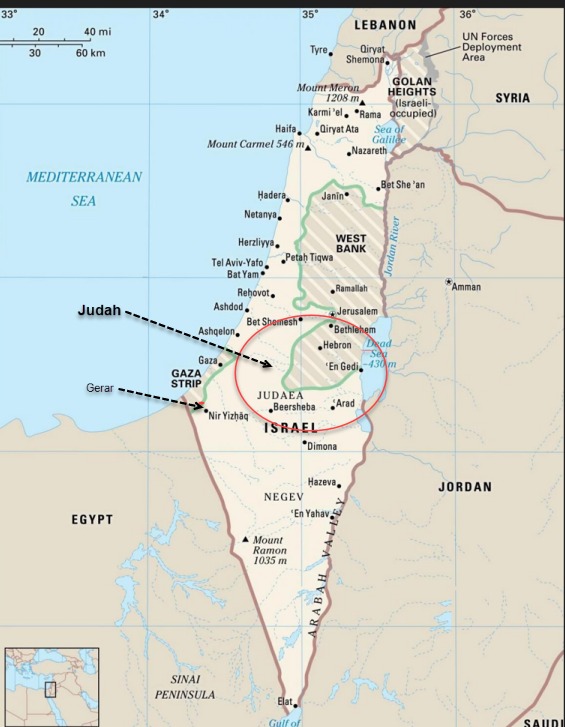
Gaza and the surrounding area are part of the land that God promised Israel (Gen. 15:18; Num. 34:5-6). Today, the area is called “the Gaza Strip,” but in the Bible it was referred to as “the land of the Philistines” (Ex. 13:17) and “Gerar” (Gen. 10:19).
The ancient inhabitants were called “Avvites.” Wandering tribes that came from the island of Caphtor = Crete in the 12th century BCE (Deut. 2:23; Jer. 47:4; Amos 9:7) annihilated them. These tribes were called “Philistines,” likely because they invaded the area (the word Pleshet in Hebrew is derived from the root P.L.S, which means to invade. Deut. 2:23; Amos 9:7).
The Philistines were giants. Some of them had six fingers on each hand and six toes, like Goliath and the sons of Rapha. The Philistines excelled as blacksmiths. An important detail, as even today, many of the rockets the terrorists in Gaza fire towards Israel are made of flying metal tubes – poles usually used for hanging road signs upon on normal days. They fill them with homemade chemical compounds and turn them into missiles. Thus, although the origin of the population living there in biblical times has changed, it appears that the spirit that operated in the area has not been subdued, and continues to roam to this very day in similar ways.
According to some scholars, the Philistines invaded the area around the same time the tribes of Israel settled the land in the days of Joshua (this creates a few dating roblems, but I won’t go into it now). In God’s original plan, Gaza was part of the inheritance of Judah (Josh. 15:47). Judah tried to conquer it but only reached its border (10:41; 11:22), leaving the region as part of “the remaining land” that still needed to be conquered (13:1-3).
Since then, that area has never been fully assimilated or absorbed into any of the regimes or empires that conquered it throughout history. The spirit of Gaza has not been annihilated. The modern inhabitants of Gaza are not descendants of the Philistines. These were destroyed during the course of history (especially by Napoleon). The Gazan population today is primarily comprised of refugees, who fled from northern cities during the 1948 war, and Egyptians who migrated to the area over the past 200 years, either attempting to dilute the dense Egyptian population or seeking better living standards than they had in Egypt.
The First Real Estate Dispute
The first recorded real estate dispute in the Bible occurred in the Gaza region. It arose over wells – between Abraham (and later Isaac) and the King of Gerar (Gen. 20-21). It was also there that the first peace treaty took place between them (Gen. 21:32; 26:28-31).
Prayer
God, please raise in Gaza and its surroundings a leader who will make room for the descendants of Abraham, and convey to them what Abimelech said back than: “Behold, the land is before you; settle wherever you please” (Genesis 20:15); who will acknowledge that “God is with you in all that you do” (21:22). And also: “Show to me and to the land in which you have sojourned the same kindness that I have shown to you” (v. 23).
Raise from among them a leader who will be attentive to You and even hear You in a dream (20:3), who will uphold some measure of integrity and cleanliness of hands (v. 5-6).
Samson’s Love Affairs
Samson had a long and complicated history with women, all of whom were Philistine. The first woman betrayed him and disclosed his secret to her people. The second was a prostitute who lacked the courage to follow the footsteps of Rahab, the prostitute from Jericho (Jud. 16:1-2). The Gazan woman did not open the gates of the city before Samson, and the fear of God did not come upon her (compare with Josh. 2:9-13).
Then Samson fell in love with Delilah. She, too, did not possess the greatness of spirit and fear of God that Rahab had. She sought to expose the secret of his strength and nagged him, eventually leading to his death (Jud. 16:17). And Samson… he was full of pride and confidence in his physical strength. He apparently believed that his strength would remain even if he will violate God’s explicit commandment. He did not hesitate to reveal a particularly important secret, even when it was clear that the enemy had encircled him (v. 20).
“Now in my prosperity I said, I shall never be moved. Lord, by Your favor You have made my mountain stand strong; You hid Your face, and I was troubled. I cried out to You, O Lord; And to the Lord I made supplication” (Ps. 30:6-8).
Samson’s story concludes with a tragic downfall. Though he killed a significant number of Philistines in his death, he too did not ultimately defeat them.
Prayer
Father in Heaven, on October 7th You shook our source of strength. Many of the “solid” rocks that we used to lean on have crumbled, and You have dried up the main source of strength upon which we used to rely.
Please, Lord, do not let our souls die with the Philistines (Jud. 16:30). Turn Your Faces towards us and our faces towards You (Ps. 27:7-9), so that we may specifically resonate with the battle cry of David, who said:
“You come against me with sword and spear and javelin, but I come against you in the name of the Lord Almighty, the God of the armies of Israel, whom you have defied. This day the Lord will deliver you into my hands, and I’ll strike you down and cut off your head. This very day I will give the carcasses of the Philistine army to the birds and the wild animals, and the whole world will know that there is a God in Israel. All those gathered here will know that it is not by sword or spear that the Lord saves; for the battle is the Lord’s, and he will give all of you into our hands” (1. Sam. 17:45-47).
From Samuel to David
In Samuel’s days, the Philistines were the number 1 enemy of the nation (1 Sam. 4-5). Their repeated attacks were one of the reasons the people demanded a king, alongside the fact that Samuel was aging. Sad, as just before the last battle under Samuel’s leadership, the nation fully repented and removed their foreign gods (1 Sam. 7). In turn, God demonstrated His faithfulness, struck the Philistines and returned some of the conquered cities to the people (v. 10-13).
The plan for a permanent victory was right in front of their eyes, yet the people basically said: “we are not convinced the next generation would also put their trust in God. We don’t have the strength to endure these cycles of short operations, temporary and repeated attacks. We need a flesh-and-blood leader to head our army” (1 Sam. 8:5).
Saul, the first king, together with his three sons, died in one of the battles against the Philistines, who by that point had expanded toward the center and the north of the land. Later, David managed to halt their expansion and pushed them back to the coastal plain, but he too did not completely annihilate them.
Some of the Philistines even became warriors in his army, particularly the Cherethites (likely derived from the name of their place of origin – Crete, see 2 Sam. 20:23) and the Pelethites (an abbreviation for “Philistine” (2 Sam. 8:18). These units served as the king’s personal bodyguards under the command of Ittai the Gittite, also a Philistine.
Prayer
Father, I pray for a miracle the likes of which the eye has not seen in our time, nor has the ear heard. I ask that from among the ranks of the enemy, from the modern edition of the inhabitants of “Philistine,” You will form special elite forces of “Cherethites” and “Pelethites.” Please raise individuals who fear You, recognize the promises You made regarding this land, and surprise us all with their dedication to You and Your people. Raise up from among them some faithful bodyguards, righteous warriors, men of valor.
From Solomon to Isaiah
The kingdom of Solomon did reach Gaza (1 Kings 5:4), but it’s not clear from the text if it included the city itself. Even if it did, it seems like he did not drive the Philistines away, as they show up again later on.
I won’t detail the names of all the kings and their wars in Gaza, apart from Jehoram, son of Jehoshaphat. An event that happened in his days might reflect some of the events of the past month. Jehoram assassinated all his brothers, and under the influence of his wife Athaliah (the daughter of Ahab and Jezebel), he restored idol worship to the kingdom of Judah. At that point God “stirred up the spirit of the Philistines and the Arabs.” This is a unique mention that combines these two powers. They attacked Judah, ransacked the king’s palace and took his sons and wives captive (2 Ch. 21:16).
Isaiah rebuked the people for the custom of divining the future using clouds, just like the Philistines did (9:11). He also said that God used the Philistines to judge Israel with severe justice. As it was then, so it is now.
Prayer
Father, please reveal the foundations of the spirit that operated in that region and still acts there to this day. In what way is the collaboration between the Philistines and Arabs still valid, and how can we restrict this spirit, so that it cannot repeatedly rise again? Is our desire to foresee the future using various means the cause for the spirit of the Philistines to rise against us?
I am asking for divine intelligence, for information that originates in the heavens. Give us specific instructions so we can loose what should be loosened and bind what needs to be bound and confined. In the name of Yeshua, and because of the heavy price He paid in order to release us from bondage and captivity.
From Rome till Now
Gaza has continued to pass from hand to hand. Greece, Rome, Byzantium, Napoleon and others. For a short time, it was ruled by the Egyptians, and then came the Ottomans, followed by and British. Occasionally, even by Israel.
The Romans changed the area’s name from “Judea” to “Syria-Palaestina” (derived from “Philistia”). This name was used in the writings of Greek and Roman writers and in those of the Church Fathers. Over time it became “Palestine,” and this confusion is identified today with the Arab entity that emerged in the region in the 20th century. But I won’t elaborate here on this historical distortion.
Some Jews who were expelled from Spain and Portugal during the Spanish Inquisition (1492) fled to Israel, settled in Gaza and established a thriving settlement engaged in trade and agriculture. About 200 years later, an interesting event took place in Gaza.
Shabbetai Zvi was a Jew. He was born in Turkey and became notorious as a false messiah – one of the most famous false messiahs in Judaism. His most devout disciple, a Jew from Gaza named Nathan, declared in 1660 that Shabbetai was the messiah, thus turning Gaza into the center of a false messianic cult. It all began when Nathan announced in the Gaza synagogue: “This is the savior of Israel, the divine messiah of Jacob.” The entire congregation replied: “May our king, Shabbetai, live forever.”
Shabbetai was followed by many throughout the Jewish world. But at a certain stage, pressure was exerted on him by the Ottoman authorities who ruled this region, and he had to choose between conversion to Islam or death. He chose life and converted, causing upheaval in the Jewish world and further schisms.
In 1956, Israel briefly occupied the Gaza Strip and later handed it over to Egypt. During the Six-Day War, Israel retook it from the Egyptians, and established Jewish settlements throughout the Strip. However, in 2005 Israel handed the strip to the Palestinian Authority and removed all its forces and citizens from there.
In 2006, Hamas won the elections. Terror attacks increased, and Israel closed the passage between the Strip and Israel. Following repeated operations intended to weaken Hamas’ power and dismantle its “Iron Fist,” we find ourselves where we are today.
The Future of Gaza and Philistia
God promised that after gathering the outcasts of Israel, He would put an end to the enmity between Judah and Ephraim, and that together they would conquer the Philistine territory (Is. 11:13-14). This is an intriguing statement, given the recent division seen in Israel up until October 6th (Judah and Ephraim in modern terms). The attack that took place on Sabbath morning ended the hostility between the two camps, who up to that point were protesting daily. Will the second part of the promise also be fulfilled during the present war? Will both camps conquer the region together?
Jeremiah prophesied that the Philistines would drink from the cup of God’s wrath (25:15) until they were drunk and would fall, never to rise again because of the sword sent among them (v. 27).
Ezekiel declared that God would stretch out His hand against the Philistines, cutting them off and bringing a great vengeance upon them (25:17). Amos (1:8), Obadiah (v. 19), and Zephaniah (2:4-5) prophesied the destruction of Gaza by fire that would consume its magnificent houses and walls.
Zephaniah further stated that the house of Judah would settle where the Philistines once lived (2:6-7). Notice the phrase “…when I return your captives” (end of Zep. 3:20). This is a triple promise: God will restore the captives, return them to their land, and most importantly, will bring them back to Himself. In Hebrew, all these motifs are encompassed in this short prophecy.
The last prophecy I want to quote is from Zechariah 9:5. When the cities of the Philistines will witness the destruction that God will bring upon the enemies of Israel, they will be filled with fear and shame. The senior leader of Gaza will perish, and God will cut off the pride of the Philistines, removing their thirst for blood (I cannot but recall the monstrous descriptions of what took place on October 7th), and whoever remains there will belong to God and will gain the status of “a leader in Judah.”
And so, Zechariah provides somewhat of an answer to one of the prayers I previously wrote: May God cut off from the Gaza Strip those who are thirsty for blood and are full of hatred. And may the remaining few who will be left there belong to God and gain the status of heroes, just like the Cherethites and the Pelethites, just like Ittai the Gittite from Gath, who was David’s own bodyguard, just like Rahab, who moved from the margins of her society to the mainstream in the tribe of Judah.
God promises that He will encamp around His house like a military force, protecting it from every passerby, so that no oppressor will ever pass through or strike them again (Zec. 9:8).
Prayer
Please, Lord, raise from Gaza an equivalent to the strong-willed woman You brought forth in Jericho. Even if it is just one woman, perhaps living right now on the fringes of society, who may even be living in sin. Awaken in her a fear of Heaven, as You did with Rahab. Assure her that she and all her household will be saved if she chooses the right path. Encamp around them, Lord, like a force that won’t let any oppressor harm them anymore.
Gaza in the NT
Gaza is mentioned only once in the NT, and nothing can sum up this article better than that one mention. An angel of the Lord sent Philip to the road that goes from Jerusalem down to Gaza. There Philip met the Ethiopian eunuch and explained to him parts of the book of Isaiah. The story peaks when the eunuch declares his belief and seeks to be baptized when they reached a place with water.
And so, the biblical story of Gaza, which began with a quarrel over water sources, continues today in a subterranean world. There, contrary to wells that produce living water, a system of death occurs in underground tunnels. However, the NT sets the tone and marks the destiny of the region: immersion into new life within a source of living water, originating in the same region, ending in a covenant of peace.
By the way, the Spirit of the Lord worked another miracle there. After the eunuch’s baptism, the Spirit snatched Philip and transported him to the Philistine city of Ashdod, from where he journeyed through all the towns northwards, up to Caesarea and declared the Good News throughout the region (Acts 8:26-40).
One Last Prayer
Jesus, the region that was once the territory of fierce Philistines and enemies of your Name, heard the Good News. Against the spirits of the Philistines and the Arabs that are active there, I ask that you awaken the Holy Spirit, snatch those who belong to You, those You desire to make champions in Judea. Fill them with the necessary strength to take a region soaked in blood and turn it into a testimony that belongs in the Kingdom.
The word “Gaza” means a mighty and fortified city, but also cruelty and oppression. When Samson provided the solution to the riddle, he posed to the Philistines, he played a word game with the name of Gaza, their city. “From the devourer came something to eat, and from the strong (Az = Gaza) came something sweet” (Judges 14:14).
In light of this, I ask that the spirit dwelling in Gaza, which combines the spirit of the iron-willed Philistines with the spirit of the Arabs, be overtaken – something that no one else can manage but You, the God of Israel’s hosts. Only You can utterly destroy it to its foundations and send it to the place where it belongs. You are the One and only Who can turn something sent out to devour us and the inhabitants of Gaza into something sweet. In Yeshua’s name!
Here’s is the recording of the second session in our series.
If you are on WhatsApp and are not yet added to the notification group for this series, please send a text to 1-423-827-9836 requesting to be added.
We look forward to seeing you next time.
 Orna Grinman | Ot OoMofet Ministries | A Sign and Example